
Master Your Money: Top Budgeting Apps for College Students
budgeting apps for college students

Master Your Money: Top Budgeting Apps for College Students

Gain financial control, track every dollar, and achieve your college financial goals with the right app.

Find Your Perfect Budget App

Key Takeaways

  • ✓ Over 70% of college students feel stressed about their finances.
  • ✓ Budgeting apps can reduce financial stress by providing clarity on spending.
  • ✓ Many apps offer student-specific features like textbook tracking or student loan reminders.
  • ✓ Consistent use of a budgeting app can lead to significant savings over a college career.

How It Works

1
Connect Your Accounts

Securely link your bank accounts, credit cards, and student loan providers to the app. This centralizes all your financial data in one place.

2
Categorize Spending

The app automatically categorizes your transactions (e.g., food, entertainment, tuition). You can customize categories to fit your unique student lifestyle.

3
Set Budget Goals

Allocate specific amounts of money to each spending category for the month or semester. The app will alert you as you approach or exceed your limits.

4
Track Progress & Adjust

Monitor your spending habits in real-time through dashboards and reports. Regularly review your budget and make adjustments as your financial situation changes.

Why Every College Student Needs a Budgeting App

Bald man holding head in despair at desk with cashbox and money. Indoor office stress concept. Photo: El Jundi / Pexels
College life is an exciting, transformative period, but it often comes with a steep learning curve, especially when it comes to managing personal finances. For many, it's the first time they're solely responsible for their money, balancing tuition, textbooks, rent, food, and social activities. Without a clear financial roadmap, it's easy to fall into the trap of overspending, accruing debt, and experiencing significant financial stress. This is where budgeting apps for college students become indispensable tools, transforming abstract financial concepts into actionable insights. Think about the typical financial challenges faced by students: fluctuating income from part-time jobs, unexpected expenses like car repairs or medical bills, the allure of campus events, and the constant pressure to keep up with peers. A robust budgeting app acts as your personal financial assistant, providing a clear, real-time picture of where your money is going. It moves beyond simple mental math or scribbling expenses in a notebook, offering sophisticated features that automate the tracking process, categorize spending, and highlight potential problem areas before they escalate. This automation is crucial for busy students who might not have hours to dedicate to manual budget reconciliation. Many apps seamlessly connect to bank accounts and credit cards, importing transactions automatically and applying smart categorization, saving valuable time and reducing the chances of human error. Moreover, these apps aren't just about tracking; they're about empowering students to make informed financial decisions. By visualizing spending patterns through charts and graphs, students can easily identify areas where they might be overspending and adjust their habits accordingly. Perhaps that daily coffee habit is costing more than anticipated, or dining out is consuming a larger portion of the budget than intended. With this clarity, students can set realistic financial goals, whether it's saving for a study abroad trip, paying down student loan interest, or building an emergency fund. The psychological benefit of having financial control cannot be overstated. It reduces anxiety, fosters a sense of responsibility, and lays a strong foundation for future financial health. In a world where financial literacy is more important than ever, starting with a budgeting app during college is a proactive step towards long-term financial success, teaching invaluable lessons about saving, spending, and debt management early on.

Essential Features of Top Budgeting Apps for Students
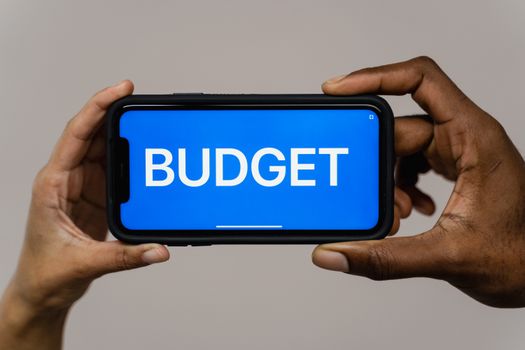
Two hands hold a smartphone displaying the word 'budget' on a blue screen, symbolizing financial planning. Photo: Tima Miroshnichenko / Pexels
When evaluating budgeting apps, especially for the unique needs of college students, certain features stand out as non-negotiable. The best budgeting apps for college students aren't just scaled-down versions of adult financial tools; they're often designed with student-specific challenges and goals in mind. First and foremost, ease of use is paramount. Students are juggling classes, part-time jobs, and social lives; they need an app that is intuitive, visually appealing, and requires minimal effort to maintain. A complicated interface or a steep learning curve will likely lead to abandonment. Look for apps with clean dashboards, simple navigation, and clear visual representations of your financial data, such as pie charts or bar graphs that show spending by category. Automated transaction tracking and categorization are also critical. Manual entry is a non-starter for most students. The ability to securely link bank accounts, credit cards, and even investment accounts (if applicable) ensures that all financial activity is captured. The app should then intelligently categorize these transactions, saving you time. While automatic categorization is helpful, the option to customize or re-categorize transactions is equally important, as student spending can sometimes defy standard categories (e.g., 'textbooks' vs. 'general shopping'). Notifications and alerts are another key feature. These can range from warnings when you're approaching your budget limit in a specific category to reminders about upcoming bill due dates, helping students avoid late fees and manage their cash flow effectively. Some apps even offer alerts for unusual spending patterns, potentially indicating fraud or simply a deviation from your normal habits. Beyond basic budgeting, advanced features can significantly enhance a student's financial journey. Debt management tools, for instance, are invaluable for students with credit card debt or who are beginning to consider their student loan repayment options. These tools can help visualize debt, suggest repayment strategies, and track progress. Goal setting and tracking capabilities allow students to save for specific targets, whether it's a down payment on a car, a spring break trip, or simply building an emergency fund. The app should allow users to create multiple savings goals and track their progress towards each. Furthermore, some apps offer educational resources, financial tips, or even a community forum, providing an extra layer of support and learning. The ability to split bills with roommates or friends directly within the app can also be a huge convenience for college living. Finally, strong security measures, including encryption and multi-factor authentication, are non-negotiable to protect sensitive financial information.

Top Budgeting Apps Tailored for College Life

From above side view of crop ethnic female broker using financial exchange app on cellphone against netbook at home Photo: Liza Summer / Pexels
Navigating the myriad of budgeting apps available can be overwhelming, so let's narrow down the field to those that truly shine for college students, offering a blend of essential features, user-friendliness, and often, student-specific advantages. While many excellent personal finance apps exist, some stand out for their adaptability to the unique financial ebb and flow of college life. **Mint** remains a perennial favorite, and for good reason. It's free, comprehensive, and offers robust features that are highly beneficial for students. Mint excels at aggregating all financial accounts in one place, providing a holistic view of your finances. Its budgeting tools are strong, allowing users to set spending limits by category and track progress with clear visuals. Students particularly appreciate its bill tracking and reminders, which can be a lifesaver for managing tuition payments, rent, and credit card due dates. Mint also offers a credit score tracker, a valuable tool for young adults beginning to establish their financial footprint, and investment tracking for those who might be dabbling in their first savings or investment accounts. Its user interface is generally intuitive, making it accessible even for those new to budgeting. **You Need A Budget (YNAB)**, while not free, often comes with a free trial and sometimes student discounts, making it a worthy investment for those serious about financial control. YNAB operates on a 'zero-based budgeting' philosophy, meaning every dollar has a job. This approach is incredibly effective for students who might have irregular income sources or specific savings goals. It forces users to be intentional with every dollar, preventing accidental overspending. YNAB's focus on future planning and breaking the paycheck-to-paycheck cycle can be transformative for students learning financial discipline. Its learning curve is slightly steeper than Mint's, but the dedicated community and extensive tutorials make it manageable. **PocketGuard** is another excellent option, particularly for students who want a simpler, more automated approach. Its standout feature is the 'In My Pocket' function, which tells you exactly how much money you have available to spend after accounting for bills, goals, and existing budgets. This immediate clarity can be incredibly helpful for students trying to avoid overdrafts or unexpected shortfalls. PocketGuard is great for tracking subscriptions, a common money drain for students, and helps identify areas where you can cut back. It offers both free and premium versions, with the free version providing plenty of functionality for most student needs. The emphasis on 'what's left to spend' makes it very practical for day-to-day financial management. While it might not have the deep analytical tools of YNAB, its simplicity and directness are its strengths for busy students looking for quick financial insights. For students exploring their financial options, understanding various aspects of credit scores for students can be profoundly beneficial.

Smart Strategies: Maximize Your Budgeting App's Potential

Man wearing casual clothes counts dollar bills while sitting on a sofa indoors. Photo: www.kaboompics.com / Pexels
Simply downloading a budgeting app isn't enough; unlocking its full potential requires consistent effort and smart strategies. Here's how college students can leverage their chosen budgeting app to achieve financial mastery: * **Start Small and Be Realistic:** Don't try to overhaul your entire financial life on day one. Begin by tracking your spending for a week or two without setting strict budgets. This allows you to understand your current habits. Then, set realistic budgets for a few key categories like food or entertainment. Overly restrictive budgets are often unsustainable and can lead to frustration. * **Categorize Diligently (and Customize):** While apps offer automated categorization, take the time to review and adjust. Create categories that genuinely reflect your student life, such as 'Textbooks & Supplies,' 'Tuition/Fees,' 'Campus Events,' or 'Coffee Runs.' The more accurate your categories, the better insights you'll gain into your spending. * **Regular Check-Ins are Key:** Schedule a weekly 15-minute 'money date' with your app. Review your spending, check your budget progress, and adjust as needed. This consistent engagement prevents financial surprises and keeps you accountable. A quick daily check-in can also be beneficial, especially early on. * **Utilize Goal Tracking:** Most apps allow you to set financial goals. Whether it's saving for a new laptop, a study abroad trip, or building an emergency fund, actively use this feature. Seeing your progress towards a goal can be incredibly motivating and help you prioritize your spending. * **Leverage Alerts and Notifications:** Turn on notifications for budget overages, upcoming bills, or large transactions. These proactive alerts can prevent late fees, help you stay within your limits, and quickly identify any unauthorized activity. * **Don't Forget Irregular Income/Expenses:** College students often have irregular income from part-time jobs or freelancing, and expenses like tuition or textbooks hit periodically. Plan for these. Some apps allow you to create specific funds or savings goals for these larger, less frequent costs, smoothing out your cash flow. * **Review and Adjust Periodically:** Your college financial situation isn't static. Your income might change, rent could increase, or you might have new financial goals. Review your entire budget monthly or at the start of each semester and make necessary adjustments. Flexibility is crucial for long-term budgeting success. * **Integrate with Other Financial Tools:** If your app allows, link it to other financial tools you use, such as investment platforms or student loan servicers. A consolidated view provides a more comprehensive picture of your overall financial health. By adopting these strategies, your budgeting app transforms from a simple tracker into a powerful financial mentor, guiding you towards better spending habits and long-term financial stability during your college years and beyond.

Comparison

FeatureMintYou Need A Budget (YNAB)PocketGuard
CostFreePaid (Free Trial/Student Discount)Free (Premium Option)
Auto-Sync Accounts
Zero-Based Budgeting
Custom Categories
Goal Tracking
Bill Tracking/Reminders
Credit Score Monitoring
'What's Left to Spend' ClarityGoodExcellentExcellent
Learning CurveLowMedium-HighLow

What Readers Say

"Before Mint, I had no idea where my money was going. Now, I see every expense, and I've actually started saving for next semester's textbooks! It's super easy to use, even for a finance newbie like me."

Sarah J. · Austin, TX

"YNAB changed my entire financial outlook. It took a bit to get used to, but now I feel totally in control. I'm building an emergency fund and even paid off a small credit card balance, all thanks to its 'give every dollar a job' philosophy."

Michael D. · Boston, MA

"PocketGuard is exactly what I needed. As a busy student, I just want to know how much I can safely spend. The 'In My Pocket' feature is a game-changer, preventing me from accidentally overspending on weekends. I've saved $300 in two months!"

Emily R. · San Diego, CA

"I've been using Mint for a year now. It's great for tracking, though sometimes the categorization isn't perfect, and I have to manually adjust. But overall, it's helped me immensely in understanding my spending habits and staying on budget for tuition and living expenses."

David K. · Chicago, IL

"As a student with a part-time job and student loans, I needed something comprehensive. Mint connects everything, from my bank to my student loans, giving me a full picture. It's the best free tool out there for college finance management."

Jessica L. · Orlando, FL

Frequently Asked Questions

Are budgeting apps for college students really secure?

Yes, reputable budgeting apps use bank-level security, including 128-bit or 256-bit encryption, multi-factor authentication, and read-only access to your financial data. They cannot move money or initiate transactions; they only read your financial information to help you track it. Always choose well-known apps with strong privacy policies.

What if I have irregular income from a part-time job or freelancing?

Many budgeting apps are designed to handle irregular income. Apps like YNAB, with its zero-based budgeting approach, are particularly good at helping you allocate fluctuating income proactively. Others allow you to adjust your budget month-to-month based on your expected income, or create 'buffers' to smooth out financial peaks and valleys.

How do I choose the best budgeting app for my specific needs?

Start by identifying your primary financial challenges (e.g., overspending, saving for a goal, managing debt). Then, consider if you prefer a free or paid app, how much automation you need, and your comfort level with a learning curve. Many apps offer free trials, so test a few before committing to one.

Do these apps cost money, and are there student discounts?

Some top budgeting apps, like Mint and PocketGuard (basic version), are free. Others, like YNAB, are paid subscription services. It's always worth checking their websites for student discounts or extended free trials, as many companies offer incentives for students.

How do budgeting apps compare to traditional spreadsheets for managing money?

Budgeting apps offer significant advantages over spreadsheets, including automated transaction import and categorization, real-time updates, visual dashboards, and mobile accessibility. While spreadsheets offer ultimate customization, apps save immense time and reduce manual errors, making them more practical for busy students.

Who should use budgeting apps for college students?

Budgeting apps are ideal for any college student who wants to gain control over their finances, understand their spending habits, save money for specific goals, avoid debt, or simply reduce financial stress. They are particularly beneficial for those living independently for the first time or managing multiple income streams and expenses.

Is it safe to link my bank accounts to these budgeting apps?

Yes, generally it is safe. Reputable budgeting apps use encryption and work with financial institutions using secure protocols, similar to how online banking operates. They typically use read-only access, meaning they can see your transactions but cannot initiate any transfers or changes to your accounts, adding a layer of security.

What's the future of budgeting apps for students?

The future likely involves more AI-driven insights, personalized financial advice, deeper integration with student loan servicers and campus financial aid, and enhanced educational modules. Expect more predictive budgeting, automated savings recommendations, and potentially features that help students optimize their income from part-time gigs or investments directly within the app.

Taking control of your college finances is a crucial step towards a stress-free academic journey and a financially sound future. Explore the best budgeting apps for college students today, find the one that fits your unique needs, and start building smarter money habits that will last a lifetime. Your future self will thank you!

Topics: budgeting apps for college studentsstudent finance managementcollege money trackingpersonal finance appssaving for college
Leo List
Brampton weed
Adultwork EstrelaBet Vai de Bet R7 Bet Betão Galera Bet Rainbet Bet9ja Shop SportyBet BetKing Sisal Loto Foot Hollywoodbets YesPlay Odibets RushBet Jugabet BetWarrior BetCity MSport betPawa Fortebet