
Unlock Your Wealth: Best High Yield Savings Accounts
Boost your earnings significantly with the top high-yield savings accounts available in the US market.
Compare Top AccountsKey Takeaways
- ✓ High-yield savings accounts (HYSAs) offer significantly higher interest rates than traditional savings accounts.
- ✓ Most HYSAs are offered by online banks, which have lower overhead costs.
- ✓ Funds in HYSAs are typically FDIC-insured up to $250,000 per depositor, per institution.
- ✓ APY (Annual Percentage Yield) is the most important metric to compare, as it includes compounding.
How It Works
Identify several top-rated high-yield savings accounts by comparing their APYs, fees, and minimum balance requirements. Look for institutions that align with your financial goals.
Once you've chosen an account, complete the online application process. This typically involves providing personal information and linking an external bank account for initial funding.
Transfer funds from your existing checking or savings account into your new high-yield account. You can usually set up recurring transfers to automate your savings.
Enjoy earning significantly more interest on your deposited funds. Monitor your account regularly and adjust your savings strategy as needed to maximize returns.
Understanding High Yield Savings Accounts (HYSAs)
 Photo: Atlantic Ambience / Pexels
But what exactly defines a 'high yield' account? While there's no strict legal definition, generally, any savings account offering an APY significantly above the national average for traditional savings accounts would qualify. This average often hovers around 0.01% to 0.06%, while top HYSAs can offer 4.00% APY or more, depending on market conditions. It's crucial to understand that these rates are variable and can change with the broader economic environment, particularly in response to actions by the Federal Reserve. However, even with fluctuations, HYSAs consistently outperform their traditional counterparts. Beyond the attractive APY, HYSAs are designed for liquidity, meaning your funds are readily accessible when you need them. While there are often limits on the number of withdrawals or transfers you can make per statement cycle (a common regulatory standard, though some banks have relaxed this), your money isn't locked away like it might be in a Certificate of Deposit (CD). This makes them an ideal choice for holding an emergency fund, which needs to be both growing and accessible. Furthermore, security is a paramount concern for any savings vehicle. Rest assured, the vast majority of reputable HYSAs in the US are FDIC-insured, meaning your deposits are protected up to $250,000 per depositor, per insured bank, in the event of the bank's failure. This provides the same level of safety as a traditional bank account, giving you peace of mind while your money works harder for you. Choosing the best high yield savings accounts is a foundational step towards building a robust financial strategy. It's not about complex investments, but rather optimizing the cash you already have, ensuring it's not sitting idly, losing purchasing power to inflation. For more on managing your cash effectively, see our guide on smart money management tips.
Factors to Consider When Choosing Your HYSA
 Photo: Саша Алалыкин / Pexels
Next, scrutinize the fee structure. While many online HYSAs boast no monthly maintenance fees, it's essential to check for other potential charges. These could include fees for excessive withdrawals, wire transfers, stopped payments, or even paper statements. Some banks might waive fees if you meet certain criteria, such as maintaining a minimum balance or setting up direct deposit. Understand these conditions thoroughly to avoid unnecessary costs that can eat into your interest earnings. Minimum balance requirements are another crucial consideration. Some HYSAs require a minimum initial deposit to open the account, while others might mandate a minimum daily or average balance to avoid fees or to earn the advertised APY. If you're starting with a smaller sum, an account with no or a low minimum balance is preferable. Conversely, if you have a substantial amount to deposit, ensure the minimum balance requirements don't pose an issue.
Accessibility and ease of use are also paramount, especially for an emergency fund. How easily can you transfer money in and out of the account? Most online HYSAs offer convenient online banking portals and mobile apps, allowing for easy transfers to linked external accounts. Check for features like mobile check deposit, bill pay, and integration with financial planning tools. While federal regulations (Regulation D) traditionally limited certain types of withdrawals or transfers from savings accounts to six per month, this regulation was suspended indefinitely in 2020. However, some banks might still impose their own limits, so it's wise to confirm their specific policies. Finally, customer service and banking reputation are vital. Even with online-only banks, you'll want access to reliable support when you have questions or encounter issues. Look for banks with strong customer reviews, multiple contact options (phone, email, chat), and a solid reputation for security and reliability. While the lure of a high APY is strong, a well-rounded decision factors in all these elements to ensure a truly beneficial banking relationship.
Top Contenders: Best High Yield Savings Accounts in the Market
 Photo: Mikhail Nilov / Pexels
One prominent player is **Ally Bank**. Known for its consistently competitive APYs and an entirely online banking model, Ally offers a straightforward high-yield savings account with no monthly maintenance fees and no minimum balance requirements to earn interest. Their mobile app is highly rated, providing features like mobile check deposit, savings 'buckets' to organize your funds for different goals, and 24/7 customer support. Ally also offers other financial products, making it a convenient option for those looking to consolidate their banking.
**Discover Bank** is another strong contender, leveraging its familiar brand name from credit cards into a robust online banking experience. Their Online Savings Account frequently boasts one of the highest APYs in the market, often without any monthly fees or minimum balance requirements. Discover also stands out for its excellent customer service, offering 24/7 support. They provide a comprehensive suite of banking products, including checking accounts and CDs, which can be appealing for customers seeking a single banking home.
**Marcus by Goldman Sachs** has quickly become a favorite for savers. Backed by the financial giant Goldman Sachs, Marcus offers competitive APYs with no fees and no minimum deposit to open an account. Their platform is simple and focused, making it easy to manage your savings. While they don't offer a full range of banking services like some competitors, their singular focus on savings and loans allows them to deliver a high-quality product.
**Capital One 360 Performance Savings** is another excellent choice, particularly for those who appreciate the option of physical branches for certain transactions, even if they primarily bank online. Capital One 360 offers a strong APY, no monthly fees, and no minimum balance requirements. Their integration with the broader Capital One ecosystem means seamless transfers and a user-friendly mobile app. This account bridges the gap between traditional and online banking, offering flexibility.
**Synchrony Bank** consistently offers competitive rates and is a strong option for pure online savings. They typically have no monthly fees and no minimum balance requirements, making it accessible for various savers. Synchrony also offers ATM card access for their savings accounts, which can be a convenient feature for those who need occasional cash access. They also have a wide array of CD options for those looking to ladder their savings. When comparing these top options, pay close attention to their current APYs, any specific features that appeal to you (like savings goals or ATM access), and their customer service reputation. Remember to check for any introductory offers and ensure you understand the terms and conditions fully. By carefully evaluating these leading accounts, you can find the best high yield savings accounts to help your money grow significantly. For deeper insights into financial planning, explore our resources on personal finance basics.
Common Mistakes to Avoid & Tips for Maximizing Your Savings
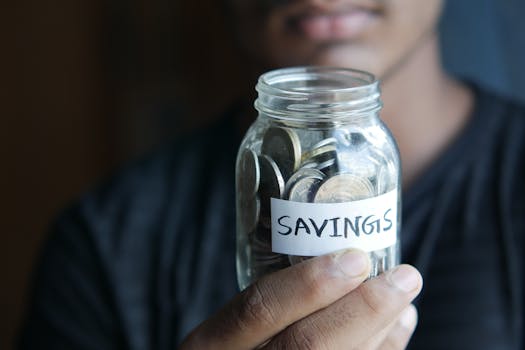 Photo: Towfiqu barbhuiya / Pexels
**Common Mistakes to Avoid:** * **Ignoring Fees:** Some HYSAs, especially those from smaller institutions, might have hidden fees for specific services or if your balance dips below a certain threshold. Always read the fine print before opening an account. * **Chasing Every Rate Hike:** While it's good to be aware of competitive rates, constantly moving your money for a fraction of a percentage point increase can be counterproductive due to transfer times and potential minimum deposit requirements. Focus on consistently strong performers. * **Not Linking to a Primary Checking Account:** A seamless transfer process between your HYSA and your primary checking account is crucial for liquidity. Ensure your accounts are properly linked and transfers are easy. * **Forgetting FDIC Insurance:** Always confirm that the institution offering the HYSA is FDIC-insured. While most reputable HYSAs are, it's a non-negotiable safety net. * **Underestimating Inflation:** Even with a high APY, inflation can erode your purchasing power. While HYSAs help mitigate this more than traditional accounts, they are not long-term investment vehicles designed to outpace significant inflation over many years.
**Tips for Maximizing Your Savings:** * **Automate Your Savings:** Set up recurring transfers from your checking account to your HYSA. Even small, consistent contributions add up significantly over time due to compounding interest. * **Set Clear Financial Goals:** Whether it's an emergency fund, a down payment, or a vacation, having specific savings goals can motivate you to contribute more and less likely to tap into your savings prematurely. * **Ladder Your Savings (with CDs):** For funds you won't need for a longer period, consider combining an HYSA with a CD ladder. This allows you to lock in higher rates for portions of your savings while maintaining liquidity with the HYSA. * **Monitor Rates Periodically:** While not chasing every hike, it's wise to review the market every 6-12 months. If your current HYSA's APY has fallen significantly behind competitors, it might be time to consider switching. * **Utilize Savings 'Buckets' or Sub-accounts:** Many online banks offer features that allow you to categorize your savings within a single account (e.g., 'Emergency Fund,' 'Vacation,' 'Car Down Payment'). This helps you visualize progress towards different goals and avoids commingling funds. By avoiding these common errors and actively employing these strategies, you can transform your high yield savings account into a powerful tool for achieving your financial aspirations.
Comparison
| Feature | Ally Bank | Discover Bank | Marcus by Goldman Sachs |
|---|---|---|---|
| Current APY (approx.) | 4.25% (variable) | 4.25% (variable) | 4.50% (variable) |
| Monthly Fees | None | None | None |
| Minimum to Open | $0 | $0 | $0 |
| FDIC Insured | ✓ | ✓ | ✓ |
| Mobile Check Deposit | ✓ | ✓ | ✗ |
| 24/7 Customer Support | ✓ | ✓ | ✗ (limited hours) |
What Readers Say
"Switching to a high-yield savings account was a game-changer for my emergency fund. I'm actually seeing real growth on my money now, which is incredibly motivating. Highly recommend for anyone tired of 0.01% interest!"
Sarah J. · Austin, TX"I opened an account with one of the top online banks mentioned and the process was so simple. The APY is fantastic, and I love being able to see my interest accrue monthly. It's truly one of the best high yield savings accounts out there."
David M. · Chicago, IL"After a year with my new HYSA, I've earned over $300 in interest on my savings, something my old bank would never have given me. This extra income has been a pleasant surprise and is directly funding a small vacation."
Emily R. · Miami, FL"The interest rates are excellent, and the online platform is very user-friendly. My only minor gripe is that transfers can sometimes take a day or two longer than I'd like, but it's a small trade-off for the higher returns."
Mark T. · Denver, CO"As a freelancer, my income can be unpredictable, so having a robust emergency fund is key. My high-yield savings account not only keeps my money safe but also ensures it's working hard for me, even when I'm not. It's perfect for managing fluctuating cash flow."
Jessica L. · Seattle, WAFrequently Asked Questions
What is the primary difference between a high yield savings account and a traditional savings account?
The main difference lies in the interest rate or Annual Percentage Yield (APY) offered. HYSAs provide significantly higher APYs, often 10 to 20 times more than traditional savings accounts, leading to greater earnings on your deposits. This is typically due to lower overhead costs of online-only banks that offer HYSAs.
Are high yield savings accounts safe?
Yes, reputable high yield savings accounts offered by banks in the US are just as safe as traditional bank accounts. They are typically FDIC-insured up to $250,000 per depositor, per institution, protecting your money in the unlikely event of a bank failure.
How do I open a high yield savings account?
Opening an HYSA is usually a straightforward online process. You'll need to provide personal information (SSN, ID), contact details, and link an existing bank account for initial funding. The entire application can often be completed in less than 15 minutes from your computer or mobile device.
Do high yield savings accounts have fees?
Many of the best high yield savings accounts, especially from online banks, boast no monthly maintenance fees. However, it's crucial to review the fee schedule for other potential charges like wire transfer fees, excessive withdrawal fees, or fees for paper statements. Always read the fine print.
How does a high yield savings account compare to a Certificate of Deposit (CD)?
HYSAs offer liquidity and variable interest rates, making your money accessible while earning interest. CDs, on the other hand, typically offer fixed, often higher, interest rates for a set term (e.g., 6 months to 5 years), but your money is locked in for that period, usually with penalties for early withdrawal.
Who should use the best high yield savings accounts?
Anyone looking to earn more interest on their liquid savings should consider an HYSA. They are ideal for emergency funds, short-term savings goals (like a down payment or vacation), or any cash you need to keep accessible but want to grow beyond traditional savings rates.
Will my interest earnings from a high yield savings account be taxed?
Yes, the interest you earn on your high yield savings account is considered taxable income by the IRS. The bank will typically send you a Form 1099-INT if you earn $10 or more in interest during the year, which you'll need to report on your tax return.
How often do high yield savings account rates change?
HYSA rates are variable and can change frequently, often in response to changes in the Federal Reserve's benchmark interest rates. While some banks might adjust rates more often than others, it's common for rates to be updated every few weeks or months, depending on market conditions.
Don't let your money sit idly in a low-interest account. By choosing one of the best high yield savings accounts, you can significantly boost your savings and accelerate your financial goals. Take the step today to make your money work harder for you and secure a brighter financial future.