Unlock Savings: Compare Personal Loan Rates Today
personal loan rates today

Unlock Savings: Compare Personal Loan Rates Today

Find the perfect personal loan with competitive rates to meet your financial goals, from debt consolidation to major purchases.

Find Your Best Rate Now

Key Takeaways

  • ✓ Personal loan rates are influenced by credit score, income, and debt-to-income ratio.
  • ✓ APR (Annual Percentage Rate) is the true cost of a loan, including interest and fees.
  • ✓ Pre-qualification allows you to see potential rates without impacting your credit score.
  • ✓ Fixed-rate loans offer predictable monthly payments, while variable rates can change.

How It Works

1
Define Your Need & Amount

Clearly identify why you need a personal loan and exactly how much you require. This helps narrow down lenders and loan types.

2
Check Your Credit Score

Understand your credit standing, as it's a primary factor in determining the rates you'll be offered. A higher score generally means lower rates.

3
Compare Offers & APRs

Utilize comparison tools and pre-qualification options from multiple lenders. Focus on the APR, not just the interest rate, for the true cost.

4
Apply & Finalize

Once you've chosen the best offer, complete the full application. Be prepared to provide documentation for income and identity verification.

Understanding Personal Loan Rates Today: What Drives the Numbers?
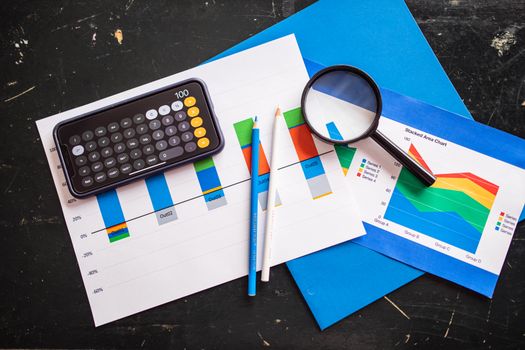
Top view of financial charts with a smartphone calculator, magnifying glass, and pencils on a desk. Photo: RDNE Stock project / Pexels
The landscape of personal loan rates today is dynamic, constantly shifting based on a variety of economic indicators, lender policies, and individual borrower profiles. For anyone considering a personal loan, grasping these underlying factors is crucial for securing the most favorable terms. At its core, a personal loan rate is the cost you pay to borrow money, expressed as a percentage of the loan amount. However, this simple definition belies a complex interplay of variables. First and foremost, the Federal Reserve's monetary policy plays a significant role. When the Fed raises or lowers the federal funds rate, it has a ripple effect across the entire financial system, influencing the prime rate, which in turn affects the interest rates banks and other lenders charge for various credit products, including personal loans. A higher federal funds rate generally translates to higher personal loan rates, and vice-versa. Therefore, keeping an eye on broader economic news can provide clues about the direction of rates. Beyond macroeconomic forces, your individual financial health is the most critical determinant of the personal loan rates you'll be offered. Your credit score stands as a beacon, signaling your creditworthiness to lenders. A FICO score of 700 or above typically qualifies you for the most competitive rates, while scores below 670 might lead to higher rates or even loan denials. Lenders use this score to assess the risk of lending to you; a higher score indicates a lower risk of default, allowing them to offer lower rates. Your debt-to-income (DTI) ratio is another key factor. This ratio compares your total monthly debt payments to your gross monthly income. Lenders prefer a lower DTI, as it suggests you have sufficient disposable income to comfortably manage new loan payments. A high DTI can signal financial strain, potentially resulting in a higher interest rate or a smaller loan amount. Lenders also consider your employment history, income stability, and overall financial history as part of their underwriting process. A stable job and consistent income provide reassurance that you can meet your repayment obligations. Understanding these elements is the first step towards navigating the market for personal loan rates today and positioning yourself for the best possible outcome. For more detailed information on improving your financial standing, explore resources on credit score improvement strategies.

Decoding APR vs. Interest Rate: The True Cost of Personal Loans

A white calculator on a stack of lined paper with a blue folder, capturing an office setting. Photo: RDNE Stock project / Pexels
When you're comparing personal loan rates today, you'll encounter two primary terms: the interest rate and the Annual Percentage Rate (APR). While often used interchangeably by consumers, these two figures represent distinct aspects of a loan's cost, and understanding their difference is paramount for making an informed decision. The interest rate is simply the percentage charged by the lender for borrowing the principal amount. It reflects the basic cost of borrowing money. For example, if you borrow $10,000 at a 7% interest rate, you'll pay $700 in interest per year, assuming no other fees. However, the APR provides a more comprehensive picture of the total cost of borrowing. It includes not only the interest rate but also any additional fees associated with the loan, such as origination fees, application fees, or closing costs. These fees can significantly increase the overall expense of a loan, and the APR standardizes this by expressing everything as a single annual percentage. Therefore, a loan with a lower interest rate might actually have a higher APR if it comes with substantial fees. Conversely, a slightly higher interest rate with no fees could result in a lower APR than an offer with a seemingly attractive low interest rate but hidden charges. For instance, consider two loan offers: Lender A offers a 6% interest rate with a 2% origination fee, while Lender B offers a 6.5% interest rate with no origination fee. Without considering the APR, Lender A might appear more appealing. However, when the origination fee is factored into Lender A's APR, it might jump to 6.8% or higher, making Lender B's 6.5% APR the more cost-effective option. Always prioritize comparing the APRs when evaluating personal loan rates today, as it allows for an apples-to-apples comparison between different lenders. Furthermore, the loan term also plays a role in the total amount of interest and fees you'll pay over the life of the loan, even if the APR remains constant. A longer loan term generally means lower monthly payments but results in more interest paid overall. A shorter term, while having higher monthly payments, typically means less interest paid over the life of the loan. Balancing the APR with a comfortable loan term that fits your budget is key to smart borrowing. Always ask lenders for the full breakdown of all fees to ensure you're getting the most accurate APR calculation.

Strategies for Securing the Best Personal Loan Rates Today

A close-up of hands analyzing mortgage rate documents with a pen and calculator in a business setting. Photo: RDNE Stock project / Pexels
Navigating the competitive landscape of personal loan rates today requires a strategic approach. Simply applying to the first lender you find is unlikely to yield the most favorable terms. Instead, a proactive and informed strategy can significantly improve your chances of securing a low-interest personal loan. The foundation of this strategy lies in preparing your financial profile. As previously discussed, your credit score is paramount. Before even beginning your search, obtain a copy of your credit report from all three major bureaus (Experian, Equifax, and TransUnion) and meticulously review it for errors. Disputing and correcting any inaccuracies can lead to an immediate bump in your score. Additionally, focusing on reducing existing debt, especially high-interest credit card balances, and making all payments on time will positively impact your creditworthiness over time. Once your credit profile is optimized, the next crucial step is to shop around. Do not settle for the first offer. Different lenders have different underwriting criteria and risk assessments, meaning the same borrower can receive varying rates from multiple institutions. Traditional banks, credit unions, and online lenders each have their own niche and competitive advantages. Online lenders, for example, often boast streamlined application processes and can sometimes offer more competitive personal loan rates today due to lower overhead costs. Credit unions are known for their member-focused approach and may provide more flexible terms or lower rates to their members, especially those with less-than-perfect credit. Many lenders offer a pre-qualification process, which is an invaluable tool in your search. Pre-qualification allows you to see potential interest rates and loan terms without undergoing a hard credit inquiry, which can temporarily ding your credit score. This soft inquiry lets you gather multiple personalized offers and compare them side-by-side, helping you identify the most attractive options before committing to a formal application. Look beyond just the lowest interest rate; consider the APR, repayment terms, any prepayment penalties, and the lender's customer service reputation. Utilizing comparison websites can also simplify this process, aggregating offers from various lenders in one place. Remember, the goal is not just to find a loan, but to find the right loan that aligns with your financial capacity and goals. For additional financial planning assistance, consider exploring resources on effective budgeting strategies.

Common Mistakes to Avoid When Seeking Personal Loan Rates Today

Close-up of a calculator atop US dollar bills, symbolizing financial planning and budgeting. Photo: www.kaboompics.com / Pexels
While the pursuit of the best personal loan rates today can lead to significant financial benefits, several common pitfalls can derail your efforts or lead to costly mistakes. Being aware of these missteps can help you navigate the borrowing process more effectively and secure a loan that truly serves your best interests. Here are some crucial mistakes to avoid: * **Not checking your credit score:** This is perhaps the most fundamental error. Your credit score dictates the rates you qualify for. Going into the application process blind means you won't know what to expect and can't address any issues beforehand. Always get your free credit report and score before applying. * **Only looking at the interest rate:** As discussed, the interest rate doesn't tell the whole story. Neglecting the APR means you might overlook hidden fees that make a seemingly low-interest loan much more expensive in the long run. Always compare APRs. * **Applying to too many lenders at once:** While shopping around is crucial, submitting full applications to numerous lenders simultaneously can trigger multiple hard credit inquiries. Each hard inquiry can slightly lower your credit score, making you appear riskier to subsequent lenders. Utilize pre-qualification tools first to minimize hard inquiries. * **Ignoring the loan term:** A lower monthly payment often comes with a longer loan term, which means you'll pay more interest over the life of the loan. Conversely, a shorter term has higher monthly payments but less total interest. Choose a term that balances affordability with the total cost of borrowing. * **Not reading the fine print:** Every loan agreement contains detailed terms and conditions. Failing to read and understand these can lead to surprises down the road, such as prepayment penalties, late fees, or specific clauses about how the loan can be used. Always review the entire loan agreement carefully. * **Borrowing more than you need:** It might be tempting to borrow a little extra, but remember that every dollar borrowed accrues interest. Only borrow the exact amount you need to avoid unnecessary debt and interest payments. * **Not considering alternatives:** Personal loans are a powerful tool, but they aren't always the best solution. For example, if you have equity in your home, a home equity loan or HELOC might offer lower rates. If you need a small amount for a short period, a credit card with a 0% introductory APR might be more suitable. Always evaluate all your options before committing to a personal loan. By avoiding these common mistakes, you can significantly improve your chances of securing the best personal loan rates today and ensure your borrowing experience is as smooth and cost-effective as possible.

Comparison

FeatureBest Option (Excellent Credit)Alternative 1 (Good Credit)Alternative 2 (Fair Credit)
Typical APR Range5.99% - 12.99%10.99% - 18.99%18.99% - 35.99%
Loan Amounts$5,000 - $100,000$2,000 - $50,000$1,000 - $25,000
Origination Fees0% - 2%1% - 5%3% - 8%
Prepayment Penalties✓ (some lenders)

What Readers Say

"I used this service to compare personal loan rates today and found an incredible offer for debt consolidation. My monthly payments dropped by over $300!"

Sarah J. · Austin, TX

"Finding the best personal loan rates today seemed daunting, but this platform made it so easy. I secured a loan for a home renovation project with a much lower APR than I expected."

Mark D. · Chicago, IL

"After struggling to get a fair rate elsewhere, I tried comparing personal loan rates today here. I was pre-qualified quickly and got a loan that saved me thousands in interest over the term."

Jessica L. · Miami, FL

"The information provided was extremely helpful in understanding how personal loan rates today are calculated. While I didn't get the absolute lowest rate, I felt confident in my choice and the process was transparent."

David P. · Denver, CO

"I needed a personal loan for an unexpected medical bill. Comparing personal loan rates today through this tool allowed me to quickly find an affordable option without impacting my credit score until I was ready to apply."

Emily R. · Seattle, WA

Frequently Asked Questions

What is a good personal loan rate today?

A 'good' personal loan rate today largely depends on your credit score and current market conditions. For borrowers with excellent credit (740+), rates below 10% APR are generally considered very good. Those with good credit (670-739) might see rates between 10-18% APR, while fair credit (580-669) could mean rates upwards of 18-36% APR. Always compare offers and focus on the APR for the true cost.

Will checking personal loan rates hurt my credit score?

Most lenders offer a 'pre-qualification' process that uses a soft credit inquiry, which does not impact your credit score. This allows you to check potential personal loan rates today without risk. Your score will only be affected by a hard inquiry when you formally submit a full application for a loan.

How can I improve my chances of getting a low personal loan rate?

To improve your chances, focus on boosting your credit score by paying bills on time and reducing existing debt. Also, aim for a low debt-to-income ratio, ensure stable employment, and shop around by getting pre-qualified offers from multiple lenders to compare the best personal loan rates today.

Are personal loan rates fixed or variable?

Personal loan rates can be either fixed or variable. Fixed-rate loans offer the same interest rate and predictable monthly payments throughout the loan term. Variable-rate loans have an interest rate that can fluctuate based on market conditions, potentially leading to changing monthly payments. Most personal loans offered today are fixed-rate.

How do personal loan rates compare to credit card interest rates?

Personal loan rates are typically significantly lower than credit card interest rates, especially for borrowers with good credit. Credit card APRs often range from 15% to 29% or higher, while personal loan APRs for well-qualified borrowers can be as low as 6-7%. This makes personal loans an attractive option for debt consolidation, replacing high-interest credit card debt.

Who should consider looking for personal loan rates today?

Anyone looking to consolidate high-interest debt, finance a large purchase (like a home renovation or wedding), cover unexpected expenses, or fund a significant life event should consider looking for personal loan rates today. They offer a structured repayment plan and often more favorable interest rates than credit cards.

What are the risks associated with personal loans?

The primary risks include taking on more debt than you can comfortably repay, which can lead to late fees, damage to your credit score, and potentially collections. Other risks include high origination fees if not carefully reviewed, and variable rates that could increase your payments unexpectedly. Always borrow responsibly and understand all terms.

What future trends might impact personal loan rates?

Future personal loan rates will likely be influenced by the Federal Reserve's monetary policy, inflation rates, and the overall health of the U.S. economy. Economic growth and stable inflation could lead to more stable rates, while significant shifts in interest rate policy or economic downturns could cause rates to fluctuate. Technological advancements in lending may also continue to drive competitiveness.

Don't let high-interest debt hold you back. Take control of your financial future by comparing personal loan rates today. Find the best offer that fits your budget and goals, and start saving money now.

Topics: personal loan rates todaybest personal loansunsecured loanslow interest personal loanspersonal loan comparison
Leo List
Brampton weed
Adultwork EstrelaBet Vai de Bet R7 Bet Betão Galera Bet Rainbet Bet9ja Shop SportyBet BetKing Sisal Loto Foot Hollywoodbets YesPlay Odibets RushBet Jugabet BetWarrior BetCity MSport betPawa Fortebet