✓ The S&P 500 tracks 500 of the largest U.S. publicly traded companies.
✓ Index funds offer broad market exposure and diversification at low cost.
✓ Historically, the S&P 500 has averaged returns of 10-12% annually over the long term.
✓ Investing in S&P 500 index funds is suitable for long-term growth and retirement planning.
How It Works
1
Understand the S&P 500
Familiarize yourself with what the S&P 500 represents – a benchmark for the overall health of the U.S. stock market. It's a market-cap-weighted index, meaning larger companies have a greater impact.
2
Choose an Investment Vehicle
Decide between an S&P 500 index mutual fund or an S&P 500 Exchange Traded Fund (ETF). Both aim to replicate the index's performance, but ETFs offer more trading flexibility.
3
Open a Brokerage Account
Select a reputable online broker to open an investment account. Consider factors like fees, minimum deposits, and available investment tools before making your choice.
4
Fund and Invest
Transfer funds into your brokerage account and then purchase shares of your chosen S&P 500 index fund or ETF. Consider dollar-cost averaging to mitigate market timing risks.
Understanding the S&P 500: The Backbone of American Industry
Photo: RDNE Stock project / Pexels
The S&P 500, or Standard & Poor's 500, is more than just a number you see on the news; it's a critical benchmark that represents the performance of 500 of the largest publicly traded companies in the United States. These companies are selected by a committee at S&P Dow Jones Indices based on criteria like market size, liquidity, and sector representation, ensuring the index is a true reflection of the broad U.S. economy. When you invest in S&P 500 index fund, you're essentially buying a tiny piece of these economic powerhouses, ranging from tech giants like Apple and Microsoft to consumer staples like Coca-Cola and Procter & Gamble, and financial institutions such as JPMorgan Chase. This broad diversification across various sectors is one of the S&P 500's most appealing features, as it mitigates the risk associated with investing in individual stocks. If one company or sector faces headwinds, the performance of others can help balance out your overall investment.
Historically, the S&P 500 has proven to be a robust engine for wealth creation. Over the long term, typically defined as periods of 10 years or more, the index has delivered an average annual return of approximately 10-12%. While past performance is not indicative of future results, this historical track record offers a compelling argument for its inclusion in a long-term investment strategy. These returns include both capital appreciation (the increase in stock prices) and dividend reinvestment, which can significantly compound returns over time. Understanding the S&P 500's composition and historical performance is the first crucial step before you decide to invest wisely. It's not about trying to pick the next big winner; it's about owning a piece of the collective success of America's leading enterprises. This foundational knowledge empowers investors to make informed decisions and appreciate the underlying strength of their investment.
The Power of Index Funds: Simplicity, Diversification, and Low Costs
Photo: DΛVΞ GΛRCIΛ / Pexels
Investing directly in all 500 companies within the S&P 500 would be an impractical, expensive, and logistically challenging endeavor for the average investor. This is where the genius of index funds comes into play. An S&P 500 index fund is a type of mutual fund or Exchange Traded Fund (ETF) designed to passively track the performance of the S&P 500 index. Instead of a fund manager actively buying and selling stocks in an attempt to beat the market (which often leads to higher fees and mixed results), an S&P 500 index fund simply buys and holds the stocks in the same proportion as the index itself. This passive management strategy is the cornerstone of its efficiency and appeal.
The primary advantages of S&P 500 index funds are their inherent simplicity, broad diversification, and remarkably low costs. Simplicity comes from the fact that you don't need to research individual companies or time the market; you're betting on the long-term growth of the U.S. economy. Diversification is achieved instantly, as your single investment spreads across 500 companies, significantly reducing company-specific risk. If one company performs poorly, its impact on your overall portfolio is minimal. Low costs are perhaps the most compelling benefit. Because index funds are passively managed, they incur far fewer operational expenses compared to actively managed funds. This translates into lower expense ratios for investors, meaning more of your money stays invested and works for you. Even a seemingly small difference in expense ratio (e.g., 0.5% versus 0.03%) can compound into significant savings over decades of investing.
For investors looking to invest in S&P 500 index fund, the choice often comes down to an index mutual fund or an ETF. Both serve the same purpose of tracking the index, but they differ in how they are traded. Mutual funds are typically bought and sold at the end of the trading day based on their Net Asset Value (NAV), while ETFs trade like individual stocks throughout the day on exchanges. ETFs generally offer slightly lower expense ratios and greater liquidity, making them a popular choice for many investors. Regardless of the vehicle, the core benefit remains: an easy, cost-effective way to gain broad market exposure and participate in the growth of the American economy.
Choosing Your Path: Mutual Funds vs. ETFs for S&P 500 Exposure
Photo: Hanna Pad / Pexels
When you decide to invest in S&P 500 index fund, one of the first practical decisions you'll face is whether to choose an S&P 500 index mutual fund or an S&P 500 Exchange Traded Fund (ETF). Both types of investment vehicles are designed to mimic the performance of the S&P 500 index, providing you with broad market exposure and diversification. However, they have distinct characteristics that might make one a better fit for your specific investment goals and preferences.
S&P 500 index mutual funds are typically purchased directly from a fund company or through a brokerage firm. They are priced once a day, at the close of the market, based on their Net Asset Value (NAV). This means that all buy and sell orders placed throughout the day are executed at the same price. Mutual funds are often favored by long-term investors who prefer to set up automated investments, such as monthly contributions from their checking account. They can be particularly suitable for retirement accounts like 401(k)s or IRAs, where regular, consistent contributions are common. Some mutual funds may have minimum initial investment requirements, which can range from a few hundred to several thousand dollars, although many providers now offer funds with no minimums or very low initial entry points.
On the other hand, S&P 500 ETFs trade like individual stocks on major exchanges throughout the trading day. This means their price fluctuates constantly based on supply and demand, and you can buy or sell them at any point during market hours. ETFs generally boast slightly lower expense ratios than their mutual fund counterparts, making them incredibly cost-effective. Their intraday tradability offers greater flexibility for investors who might want to actively manage their portfolio or take advantage of market movements, although for a long-term S&P 500 strategy, frequent trading is usually discouraged. ETFs also typically don't have minimum initial investment requirements beyond the price of a single share, making them highly accessible for investors with smaller capital. For those looking to start investing with less, ETFs can be an excellent entry point. Ultimately, the choice between an S&P 500 index mutual fund and an S&P 500 ETF depends on your trading preferences, investment amount, and whether you prioritize intraday trading flexibility or automated, end-of-day transactions. Both are excellent tools for gaining exposure to the S&P 500.
Navigating the Investment Journey: Practical Tips and Common Mistakes to Avoid
Photo: www.kaboompics.com / Pexels
Embarking on your journey to invest in S&P 500 index fund can be straightforward, but a few practical tips can help ensure a smoother and more successful experience, while being aware of common pitfalls can prevent costly errors.
**Practical Tips for Investing in S&P 500 Index Funds:**
* **Start Early and Invest Regularly:** Time is your greatest asset in investing. The longer your money is invested, the more it can benefit from compounding. Implement dollar-cost averaging by investing a fixed amount regularly, regardless of market fluctuations. This strategy averages out your purchase price over time and reduces the risk of buying at a market peak.
* **Keep Costs Low:** Prioritize index funds or ETFs with very low expense ratios. Even a fraction of a percent difference can erode significant returns over decades.
* **Stay Diversified (Beyond S&P 500):** While the S&P 500 is diversified across 500 companies, it's still entirely focused on large-cap U.S. equities. Consider adding international stocks, small-cap stocks, and bonds to your portfolio for even broader diversification and risk management, depending on your age and risk tolerance.
* **Utilize Tax-Advantaged Accounts:** Whenever possible, invest in S&P 500 index funds within tax-advantaged accounts like a 401(k), IRA (Traditional or Roth), or HSA. These accounts offer significant tax benefits that can accelerate your wealth accumulation.
* **Rebalance Periodically:** Over time, your asset allocation might drift from your target due to varying market performance. Periodically rebalance your portfolio (e.g., once a year) to bring it back to your desired allocation.
**Common Mistakes to Avoid:**
* **Market Timing:** Attempting to predict market highs and lows is a losing game for most investors. Consistent, long-term investing through all market cycles is far more effective than trying to jump in and out.
* **Panicking During Downturns:** Market corrections and bear markets are a normal part of investing. Selling your investments during a downturn locks in losses and prevents you from participating in the inevitable recovery. Maintain a long-term perspective.
* **Ignoring Fees:** High fees, even if they seem small, can drastically reduce your net returns over decades. Always check expense ratios and other charges.
* **Over-diversification or Under-diversification:** While diversification is key, owning too many similar funds can lead to 'di-worsification' where you effectively own the market but with higher costs. Conversely, not diversifying enough (e.g., only investing in a few individual stocks) exposes you to unnecessary risk.
* **Emotional Investing:** Letting fear and greed dictate your investment decisions is a recipe for poor outcomes. Stick to your investment plan and avoid impulsive reactions to market news.
By following these tips and avoiding common mistakes, you can harness the power of S&P 500 index funds to build substantial wealth over the long term.
Comparison
Feature
S&P 500 Index ETF (e.g., SPY, IVV, VOO)
S&P 500 Index Mutual Fund (e.g., VFIAX)
Actively Managed Large-Cap Mutual Fund
Trading Flexibility
Traded throughout the day like stocks
Traded once daily at market close
Traded once daily at market close
Expense Ratio (Avg.)
0.03% - 0.09%
0.04% - 0.15%
0.50% - 1.50%+
Minimum Investment
Price of one share (e.g., $400-$500)
Often $0 - $3,000+
Often $0 - $3,000+
Diversification
Broad (500 US large-cap companies)
Broad (500 US large-cap companies)
Manager-dependent; typically broad
Management Style
Passive (tracks index)
Passive (tracks index)
Active (attempts to beat index)
Capital Gains Tax Efficiency
Generally higher
Potentially lower due to internal trading
Potentially lower due to frequent trading
Suitability
Long-term growth, flexible trading
Long-term growth, automated investing
Seeking alpha, willing to pay higher fees
What Readers Say
★★★★★
"Deciding to invest in S&P 500 index fund was the best financial decision I've made. It's simple, low-cost, and I've seen consistent growth over the past decade without having to constantly monitor individual stocks."
David L. · Austin, TX
★★★★★
"As a busy professional, I appreciate the hands-off approach of S&P 500 index funds. It allows me to participate in the market's growth without dedicating hours to research, freeing up my time for other priorities."
Sarah M. · Boston, MA
★★★★★
"I started investing with a small amount in an S&P 500 ETF five years ago. My initial $10,000 has grown to over $16,000, thanks to the market's performance and the power of compounding. It's a solid foundation for my retirement."
Michael R. · San Diego, CA
★★★★★
"While I love the diversification and low fees of my S&P 500 index fund, I do occasionally wish for more aggressive growth opportunities. However, for core portfolio stability, it's truly unbeatable."
Jessica W. · Chicago, IL
★★★★★
"For my kids' college fund, I wanted something reliable and growth-oriented. An S&P 500 index fund was the perfect choice. It's easy to understand, and I feel confident about its long-term potential to help fund their future."
Robert K. · Denver, CO
Frequently Asked Questions
What is the average historical return of the S&P 500?
Historically, the S&P 500 has delivered an average annual return of approximately 10-12% over the long term, typically measured over decades. This figure includes both capital appreciation and reinvested dividends, demonstrating its strong potential for wealth accumulation.
Is investing in S&P 500 index fund safe?
While no investment is entirely without risk, S&P 500 index funds are considered relatively safe for long-term investors due to their broad diversification across 500 leading U.S. companies. This diversification significantly reduces the impact of any single company's poor performance, spreading risk across the entire market.
How do I start investing in an S&P 500 index fund?
To start, you need to open a brokerage account with a reputable online broker. Once your account is funded, you can search for and purchase shares of an S&P 500 index ETF (like SPY, IVV, or VOO) or an S&P 500 index mutual fund (like VFIAX), depending on your preference.
What are the fees associated with S&P 500 index funds?
S&P 500 index funds are known for their very low fees, typically expressed as an 'expense ratio.' These usually range from 0.03% to 0.15% annually, meaning for every $10,000 invested, you might pay only $3 to $15 in fees per year, significantly less than actively managed funds.
How does an S&P 500 index fund compare to individual stock picking?
An S&P 500 index fund offers broad market exposure and automatic diversification at a very low cost, aiming to match market performance. Individual stock picking, conversely, involves higher risk and requires extensive research, with the goal of outperforming the market, which is challenging even for professionals.
Who should consider investing in S&P 500 index fund?
Anyone seeking long-term capital growth with broad market exposure, diversification, and low costs should consider S&P 500 index funds. They are particularly well-suited for retirement planning, college savings, and general wealth building for investors with a long time horizon.
What are the risks of investing in S&P 500 index fund?
The primary risk is market risk, meaning the value of your investment can decline if the overall stock market (represented by the S&P 500) goes down. While diversified, it doesn't eliminate market volatility, and short-term losses are possible, though historically, the market has recovered over time.
Will the S&P 500 continue its growth trajectory in the future?
While past performance doesn't guarantee future results, many financial experts believe the S&P 500, representing the largest U.S. companies, will continue to grow over the long term due to innovation, economic expansion, and corporate profitability. However, short-term fluctuations are always expected.
Ready to build long-term wealth with a proven strategy? Learn more about how to invest in S&P 500 index fund and take the first step towards a financially secure future today. Your journey to diversified, low-cost investing starts here.
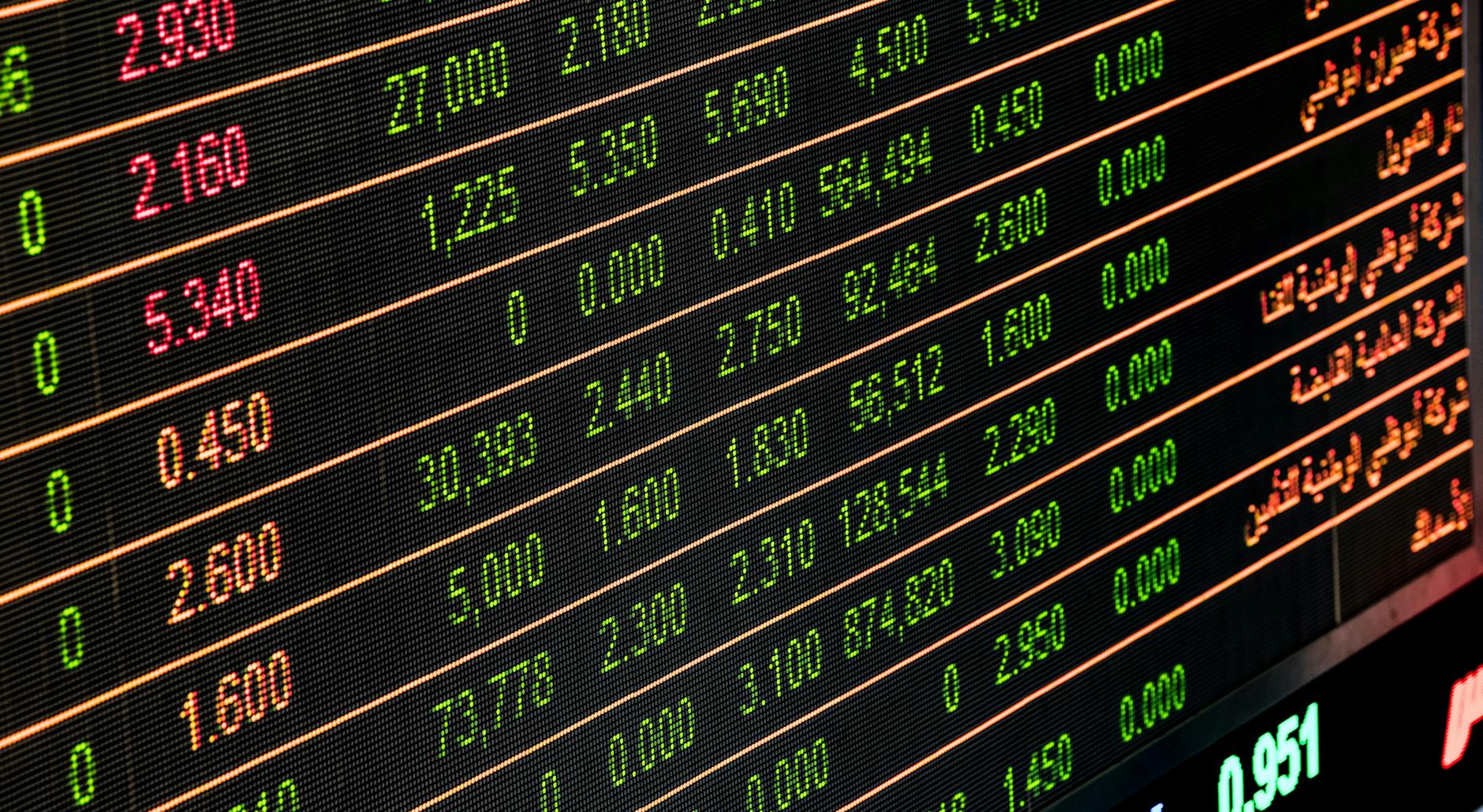
 Photo: RDNE Stock project / Pexels
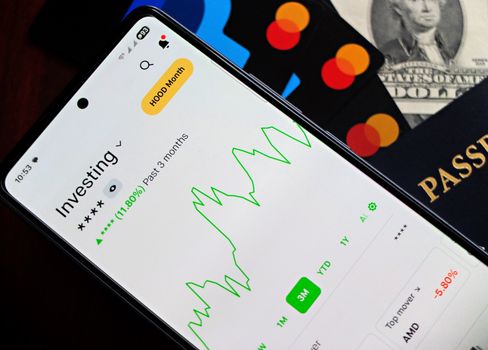 Photo: DΛVΞ GΛRCIΛ / Pexels
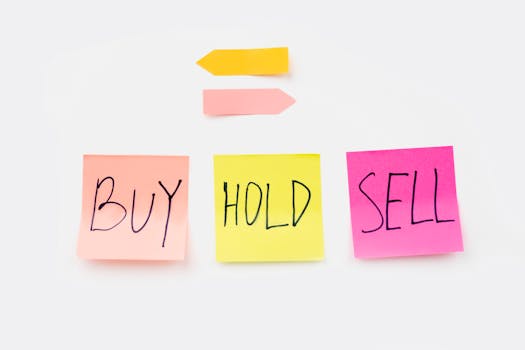 Photo: Hanna Pad / Pexels
 Photo: www.kaboompics.com / Pexels