How to Rent a Car Abroad: Your Ultimate Guide
rent a car abroad

How to Rent a Car Abroad: Your Ultimate Guide

Unlock the secrets to seamless international car rentals, ensuring a smooth journey and maximum savings on your next adventure.

Start Your Journey

Key Takeaways

  • ✓ An International Driving Permit (IDP) is often required, even if your home license is accepted.
  • ✓ Credit card rental car insurance usually has exclusions for international rentals.
  • ✓ Booking in advance, especially through local aggregators, often yields better rates.
  • ✓ Understand fuel policies (full-to-full is generally best) and local traffic laws before you drive.

How It Works

1
Research & Book Early

Compare rental agencies, vehicle types, and prices well in advance of your trip. Look for deals and understand what's included in the base rate.

2
Understand Insurance Options

Decipher the various insurance types (CDW, SLI, etc.) and determine what coverage you genuinely need. Check if your credit card or personal auto insurance offers international benefits.

3
Prepare Documentation

Secure an International Driving Permit (IDP) if required, ensure your driver's license is valid, and have your passport and credit card ready for pickup.

4
Inspect & Document

Thoroughly inspect the vehicle for any existing damage before driving away and take photos or videos. Ensure the fuel level matches the agreement to avoid unexpected charges.

Navigating International Car Rental Requirements

Top view of two Ukrainian passports with US dollar bills on a white surface. Photo: Borys Zaitsev / Pexels
Renting a car abroad can open up incredible travel experiences, offering freedom and flexibility that public transport simply can't match. However, the process isn't always as straightforward as renting a car at home in the US. Different countries have varying regulations, documentation requirements, and local customs that can catch even the most seasoned traveler off guard. Understanding these nuances is crucial for a smooth, stress-free rental experience. The first and most critical step is to research the specific requirements of your destination country. Many countries, particularly those outside of North America, require an International Driving Permit (IDP) in conjunction with your valid US driver's license. An IDP is essentially a multi-language translation of your domestic driver's license, designed to be understood by foreign authorities. It is not a standalone license; you must always carry your valid US driver's license with it. Obtaining an IDP is relatively easy and inexpensive, available through AAA or AATA in the US. It typically costs around $20 and is valid for one year. Failing to have an IDP where it's required can lead to denied rentals, fines, or even legal issues if you're pulled over. Don't assume your US license is universally accepted – always check beforehand. Beyond the IDP, most rental agencies will require a valid passport, a major credit card in the primary driver's name, and that the primary driver meets the minimum age requirement. Minimum age requirements vary significantly by country and even by rental agency. While 21 is a common minimum, some countries or agencies might require drivers to be 23 or even 25, especially for certain vehicle categories. Young driver surcharges are also very common for those under 25, which can significantly increase the total cost of your rental. It's vital to factor these potential surcharges into your budget. Similarly, some agencies have maximum age limits, though these are less common. Always verify the age policies when booking. Another critical document to consider is your credit card. Most international car rental agencies require a major credit card (not a debit card) for the security deposit. This deposit can be substantial, often ranging from several hundred to over a thousand dollars, depending on the car category and the country. The rental agency will place a hold on this amount, which is released upon the safe return of the vehicle. Ensure your credit card has sufficient available credit to cover this hold. Using a debit card for the deposit is generally discouraged, as it can lead to longer hold periods on your actual funds and some agencies may not even accept them for this purpose, potentially leaving you stranded without a car. Always confirm the accepted payment methods and deposit policies when booking to avoid last-minute complications. Understanding these foundational requirements is the bedrock of a successful international car rental. For more detailed information on managing travel finances, consider exploring our guide to international banking fees.

Demystifying Car Rental Insurance Overseas

A car is reflected in a side mirror on a scenic forest road. Photo: Jonathan Cooper / Pexels
One of the most complex and often misunderstood aspects of renting a car abroad is insurance. Unlike in the US where your personal auto insurance might extend to rental cars, international coverage is a different beast entirely. It's crucial to understand the various types of insurance offered and determine what you truly need to protect yourself without overpaying. The primary types of insurance you'll encounter are Collision Damage Waiver (CDW) or Loss Damage Waiver (LDW) and Supplemental Liability Insurance (SLI). CDW/LDW covers damage to the rental car itself, often with an excess (deductible) that you'd be responsible for in case of an accident. SLI, on the other hand, covers damage or injury you might cause to other people or their property. Many countries mandate a certain level of liability insurance by law, which is often included in the base rental price, but the coverage limits might be very low. It's essential to scrutinize what's included and what's not. Your personal US auto insurance policy rarely extends to international rentals. While some premium policies might offer limited coverage, it's not the norm, and even then, the process for filing claims from abroad can be cumbersome. More commonly, US credit cards offer rental car insurance as a benefit. This is typically a secondary CDW/LDW coverage, meaning it kicks in after your primary insurance (which you likely don't have for international rentals) has paid out. Some premium credit cards, however, offer primary coverage, which can be a significant money-saver. Before relying on your credit card, call your card issuer to confirm: 1) if they cover international rentals, 2) which countries are excluded (e.g., Israel, Ireland, Jamaica are common exclusions), 3) if they offer primary or secondary coverage, 4) what types of vehicles are covered (luxury cars, vans, and off-road vehicles are often excluded), and 5) what their claims process entails. Get this information in writing if possible. Beyond CDW/LDW and SLI, you might be offered Personal Accident Insurance (PAI) and Personal Effects Coverage (PEC). PAI covers medical expenses for you and your passengers in case of an accident, while PEC covers loss or damage to your personal belongings in the car. These are often redundant if you have good travel insurance or homeowner's/renter's insurance. Always check your existing policies before purchasing these extras. The rental counter staff are often incentivized to sell you as much insurance as possible, so being informed can save you hundreds of dollars. If you opt to decline the rental company's CDW and rely on your credit card, be prepared for them to put a much larger hold on your credit card as a security deposit, as they are taking on more risk. Understanding your existing coverage and filling any gaps intelligently is key to managing the financial aspect of your rental. Sometimes, third-party insurance providers specialize in international rental car coverage, offering competitive rates for primary CDW/LDW that can be cheaper than the rental company's direct offerings and avoid the large credit card hold.

You may also find Rental Car useful.

Booking Strategies and Hidden Costs to Avoid
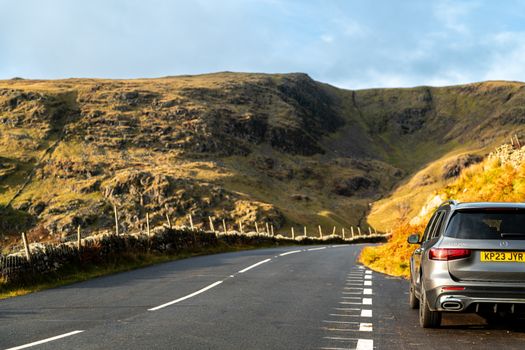
A scenic view of a mountain road with a parked car during autumn, showcasing rural nature. Photo: Michał Robak / Pexels
When it comes to booking your international rental car, strategic planning can significantly impact both your experience and your wallet. Don't just walk up to the counter; booking in advance, preferably several weeks or even months out, almost always secures better rates, especially during peak travel seasons. Utilize reputable online aggregators and direct rental company websites to compare prices. Be wary of deals that seem too good to be true, as they often come with hidden clauses or extremely high deductibles. When comparing, ensure you're looking at the total price, including any mandatory local taxes and fees that might not be immediately apparent. Some aggregators may show a low base rate only to add substantial fees at checkout. Always try to compare 'apples to apples' by configuring the same vehicle type, rental duration, and pick-up/drop-off locations across different platforms. Consider local rental agencies versus international brands. While global brands like Hertz, Avis, and Enterprise offer consistency and often have English-speaking staff, local companies can sometimes provide more competitive pricing or unique vehicle options. However, local companies might have less flexible cancellation policies, older fleets, or less robust customer service in English. Read reviews carefully before committing to a smaller, local agency. Another important consideration is the pick-up and drop-off locations. Airport rentals are convenient but often come with hefty airport surcharges. If your itinerary allows, picking up a car from an downtown location a short taxi or public transport ride away can save you a significant amount. Similarly, one-way rentals across country borders are generally very expensive due to cross-border fees and logistical challenges for the rental company. If you plan to travel extensively, consider a round-trip rental within one country and use public transport for cross-border segments. Fuel policies are another common source of unexpected charges. The 'full-to-full' policy is generally the most economical. You pick up the car with a full tank and return it full, only paying for the fuel you use. Avoid 'prepaid fuel' options where you pay for a full tank upfront and are encouraged to return it empty; you rarely use the exact amount, and the per-gallon price is often inflated. 'Full-to-empty' policies are the worst, as you pay for a full tank at the rental company's inflated price and are expected to return it empty, often leading to wasted fuel or overpaying. Always clarify the fuel policy when booking and again at pick-up. GPS navigation can also be a costly add-on. Instead, download offline maps on your smartphone or bring a dedicated GPS unit from home. Many modern smartphones are excellent for navigation abroad, especially with local SIM cards or international data plans. Finally, carefully inspect the vehicle for any existing damage before you drive off. Take photos or videos of every scratch, dent, and interior imperfection. Documenting this thoroughly can save you from being charged for pre-existing damage upon return. For smart financial planning related to your travels, check out this resource on budgeting for international trips.

Essential Tips for Driving Safely and Legally Abroad

Capturing a picturesque road journey through Bhutan's mountainous landscape. Photo: Prateek Katyal / Pexels
Driving in a foreign country can be exhilarating, but it also comes with a unique set of challenges. Familiarizing yourself with local traffic laws, customs, and road signs is paramount for your safety and to avoid costly fines. Here are some essential tips to ensure a smooth journey: * **Understand Local Traffic Laws:** This is non-negotiable. Research the specific driving laws of your destination. This includes speed limits (which may be in kilometers per hour), right-of-way rules, rules for turning, and specific regulations regarding headlights, seatbelts, and mobile phone usage. For instance, in many European countries, it's mandatory to carry a reflective vest and warning triangle in the car. Some countries require headlights to be on at all times, even during the day. Ignorance of the law is not an excuse, and fines can be steep. * **Right-Hand vs. Left-Hand Traffic:** Be acutely aware of which side of the road they drive on. If you're accustomed to driving on the right (like in the US) and you're traveling to a country that drives on the left (e.g., UK, Australia, Japan), give yourself extra time to adjust. Rental cars in left-hand drive countries will have the steering wheel on the right, which can take some getting used to, especially when navigating roundabouts or making turns. Practice in a quiet area before hitting busy roads. * **Road Signs and Markings:** Familiarize yourself with international road signs. While many are universally recognized, some can be unique to a region. A quick online search for 'road signs [country name]' before your trip can be incredibly helpful. Also, pay attention to road markings, as they can convey important information about lanes, parking, and no-passing zones. * **Tolls and Vignettes:** Many countries have toll roads, and the payment methods can vary widely. Some accept cash or credit cards at a booth, while others use electronic systems that require a transponder or a pre-purchased 'vignette' (sticker) affixed to the windshield. Rental cars might come with these devices, or you may need to buy them separately. Clarify this with the rental agency to avoid fines. * **Parking Regulations:** Parking can be a nightmare in foreign cities. Understand local parking signs, payment methods (meters, apps, parking garages), and restrictions. Illegally parked cars are often towed quickly, leading to significant inconvenience and expense. * **Pedestrians and Cyclists:** Be extra vigilant for pedestrians and cyclists, especially in dense urban areas. Different cultures have different attitudes towards road sharing. Always yield to pedestrians, especially at crossings. * **Emergency Procedures:** Know the local emergency number (e.g., 112 in Europe, 999 in the UK). Keep the rental company's emergency contact information handy. If you are involved in an accident, contact the police and the rental company immediately, and document everything with photos. * **Alcohol and Driving:** The legal blood alcohol limit for driving varies by country and is often much lower than in the US. Some countries have a zero-tolerance policy. It's always safest to avoid alcohol entirely if you plan to drive. Penalties for driving under the influence can be severe, including heavy fines, license suspension, and even imprisonment. By taking the time to research and understand these crucial aspects of driving abroad, you can ensure a safer, more enjoyable, and compliant experience on the open road.

Comparison

FeatureCredit Card InsuranceRental Company CDWThird-Party Insurance
Primary CoverageOften SecondaryOften Primary (with deductible)Often Primary
International CoverageVaries, many exclusionsTypically includedSpecifically designed for international
CostFree (if eligible)Daily fee, highDaily/per trip fee, moderate
Deductible/ExcessYes, if secondaryYes, varies widelyOften zero or low
Claims ProcessCan be complexStraightforwardOften streamlined
Security DepositHigher hold on cardStandard hold on cardStandard hold on card
Liability CoverageRarely includedBasic often included, SLI extraCan be purchased separately

What Readers Say

"This guide made renting a car in Italy so much less stressful! I followed the advice on IDP and credit card insurance, saving me a ton of money at the counter. Truly invaluable insights for anyone planning to drive abroad."

Sarah J. · Austin, TX

"I used to dread international car rentals due to hidden fees and confusing insurance. This article broke down everything clearly, especially the fuel policies. My recent trip to Portugal was a breeze thanks to these tips."

Mark D. · Seattle, WA

"After reading this, I got my IDP and confirmed my credit card's primary international coverage. The result? I saved over $300 on my rental in Ireland and avoided a huge headache with the rental company's aggressive upsells."

Emily R. · Miami, FL

"While very comprehensive, I wish there was a bit more detail on specific country driving quirks, like traffic circles in France. Still, the insurance and documentation sections were incredibly helpful and well-explained, making my trip to France much smoother."

David L. · Chicago, IL

"As a first-time international driver, I was overwhelmed. This article provided a clear, step-by-step approach to renting a car abroad. The advice on checking for existing damage was a lifesaver when I picked up my car in Iceland."

Jessica M. · Denver, CO

Frequently Asked Questions

Is an International Driving Permit (IDP) always required when renting a car abroad?

Not always, but often. Many countries, especially those outside of North America, legally require an IDP in conjunction with your valid US driver's license. It serves as a translation of your license. Always check the specific requirements for your destination country before you travel to avoid issues at the rental counter or with local authorities.

Will my US auto insurance or credit card cover me for international car rentals?

Your personal US auto insurance rarely extends to international rentals. Credit card rental car insurance often provides secondary CDW/LDW coverage, meaning it kicks in after your primary insurance (which you likely won't have abroad). It's crucial to call your credit card issuer to confirm international coverage, exclusions (certain countries or vehicle types), and if it's primary or secondary.

How can I avoid hidden fees when booking a rental car abroad?

To avoid hidden fees, always book in advance and compare total prices, including all mandatory taxes and fees. Be wary of cheap base rates. Carefully review the fuel policy (full-to-full is usually best), decline unnecessary add-ons like expensive GPS, and consider picking up the car from a non-airport location to avoid surcharges. Thoroughly inspect the car and document existing damage.

Is it cheaper to buy car rental insurance from the rental company or a third-party?

It's often cheaper to purchase CDW/LDW from a third-party insurance provider specializing in international rental car coverage, or to rely on a premium credit card that offers primary coverage. Rental companies' insurance can be very expensive. However, always ensure your chosen third-party or credit card coverage is adequate and covers your destination before declining the rental company's offerings.

What's the difference between CDW and SLI, and which do I need?

CDW (Collision Damage Waiver) or LDW (Loss Damage Waiver) covers damage to the rental car itself, often with a deductible. SLI (Supplemental Liability Insurance) covers damage or injury you might cause to other people or their property. You typically need both. While basic liability might be included in the rental, it's often minimal, so supplemental liability is recommended. Your credit card usually only covers CDW/LDW.

Who should rent a car abroad?

Renting a car abroad is ideal for travelers who want maximum flexibility, plan to explore rural areas or multiple towns not easily accessible by public transport, or those traveling with families who need more space and convenience. It's also great for road trip enthusiasts seeking an immersive experience beyond major cities.

What are the risks of driving abroad without proper preparation?

The risks include denied rentals, significant fines for not having required documents like an IDP, expensive charges for damage if uninsured, legal issues from accidents due to unfamiliarity with local laws, and unexpected costs from hidden fees or towing. Proper preparation significantly mitigates these risks, ensuring a safer and more enjoyable trip.

How might technology change international car rentals in the future?

Future international car rentals may see increased adoption of keyless entry via smartphone apps, advanced telematics for usage-based insurance, more electric vehicle options with extensive charging networks, and potentially autonomous driving features. Digital ID verification and blockchain for contracts could also streamline the rental process, making it faster and more secure.

Don't let the complexities of international car rentals deter you from exploring the world on your own terms. With this comprehensive guide, you're now equipped with the knowledge to confidently navigate documentation, insurance, and hidden costs. Plan smart, drive safe, and embark on your next global adventure with peace of mind.

Topics: rent a car abroadinternational car rentalcar rental insurance overseasdriving abroad tipsforeign car rental guide
Leo List
Brampton weed
Adultwork