
What is a Roth IRA and How Does it Work? Your Tax-Free Retirement
what is a Roth IRA and how does it work

What is a Roth IRA and How Does it Work? Your Tax-Free Retirement

Understand the powerful advantages of a Roth IRA to build a secure, tax-free retirement nest egg.

Start Your Roth Journey

Key Takeaways

  • ✓ Contributions are made with after-tax dollars.
  • ✓ Qualified withdrawals in retirement are tax-free.
  • ✓ No required minimum distributions (RMDs) for the original owner.
  • ✓ Income limits apply for direct contributions.
  • ✓ Can be used for first-time home purchase or qualified education expenses without penalty under certain conditions.

How It Works

1
Contribute After-Tax Dollars

You fund your Roth IRA with money you've already paid taxes on. This means your contributions are not tax-deductible in the current year.

2
Invest and Grow Tax-Free

Once in your Roth IRA, your investments (stocks, bonds, mutual funds, etc.) grow completely tax-free. You won't pay taxes on dividends or capital gains within the account.

3
Qualified Withdrawals are Tax-Free

When you retire and meet certain conditions (age 59½ and the account has been open for 5 years), all your withdrawals – including your earnings – are 100% tax-free. This is the Roth IRA's biggest advantage.

4
Flexibility and Estate Planning

Roth IRAs offer flexibility, including penalty-free withdrawals of contributions at any time. They also provide significant estate planning benefits, as beneficiaries can inherit the account tax-free.

Understanding the Fundamentals of a Roth IRA: Contribution Mechanics and Eligibility

Two businessmen engaged in a focused discussion over financial documents in a modern office setting. Photo: RDNE Stock project / Pexels
Delving into the core mechanics of a Roth IRA is crucial for anyone considering this powerful retirement vehicle. At its heart, a Roth IRA is an individual retirement account that allows your investments to grow tax-free, and qualified withdrawals in retirement are also tax-free. This stands in stark contrast to traditional IRAs, where contributions are often tax-deductible, but withdrawals in retirement are taxed as ordinary income. The fundamental difference lies in *when* you pay your taxes. With a Roth, you pay your taxes upfront on the money you contribute. This means you fund your Roth IRA with 'after-tax' dollars, which are funds from your income that have already been subjected to federal (and often state) income tax. This upfront tax payment is precisely what grants the incredible benefit of tax-free growth and tax-free withdrawals later in life. Eligibility for contributing directly to a Roth IRA is tied to your Modified Adjusted Gross Income (MAGI). The IRS sets income thresholds that determine whether you can contribute the full amount, a reduced amount, or nothing at all in a given tax year. These limits are adjusted periodically for inflation, so it's essential to check the latest IRS guidelines. For instance, in 2024, individuals with a MAGI below a certain threshold can contribute the maximum, while those above a higher threshold are phased out entirely. If your income exceeds these direct contribution limits, you might still have an option through the 'backdoor Roth IRA' strategy, which involves contributing to a non-deductible traditional IRA and then converting it to a Roth. This strategy has specific rules and potential tax implications, so consulting a financial advisor is highly recommended before pursuing it. Beyond income, you must also have earned income to contribute to a Roth IRA. This means income from wages, salaries, or self-employment. Investment income or passive income generally does not count as earned income for Roth IRA contribution purposes. There's also an age requirement: you must be under age 70½ to contribute to a traditional IRA, but there's no upper age limit for contributing to a Roth IRA, as long as you have earned income. This flexibility makes Roth IRAs particularly appealing for those who continue working later in life or want to save for retirement even after they've passed the traditional IRA contribution age cutoff. Understanding these contribution mechanics and eligibility rules is the first step in harnessing the power of a Roth IRA for your long-term financial goals. For more details on retirement planning, explore our guide on how to choose the right retirement account.

The Power of Tax-Free Growth and Withdrawals: Unpacking Roth IRA Benefits
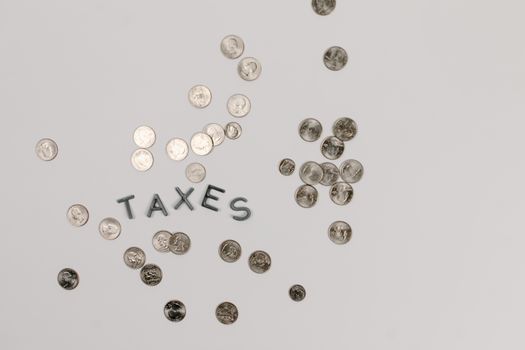
A visually striking flatlay of coins with 'Taxes' text on a white surface, ideal for financial concepts. Photo: Tara Winstead / Pexels
The most compelling advantage of a Roth IRA, and often the primary reason individuals choose it, is the unparalleled benefit of tax-free growth and tax-free qualified withdrawals in retirement. Imagine investing your money today, watching it compound over decades, and then being able to take every single dollar out, including all the accumulated earnings, without paying a dime in federal income tax. This is the promise of a Roth IRA. Unlike a traditional 401(k) or IRA, where your distributions in retirement are taxed at your ordinary income rate, a Roth IRA provides a predictable tax-free income stream. This certainty is incredibly valuable, especially when considering the unpredictable nature of future tax rates. If you believe tax rates are likely to be higher in the future than they are today (a common assumption given historical trends and government spending), then paying taxes now via a Roth IRA can be a financially savvy move. Another significant benefit is the flexibility it offers. Unlike traditional IRAs and 401(k)s, Roth IRAs do not have Required Minimum Distributions (RMDs) for the original owner. This means you are not forced to withdraw money from your account once you reach a certain age (currently 73), allowing your investments to continue growing tax-free for as long as you live. This flexibility is a huge advantage for estate planning, as it allows you to pass on a potentially substantial, tax-free inheritance to your beneficiaries. Furthermore, Roth IRAs offer a unique feature: you can withdraw your contributions at any time, for any reason, without paying taxes or penalties. This acts as an emergency fund of last resort, providing access to your principal without disturbing the tax-free growth of your earnings, provided certain conditions are met for earnings withdrawals. The 'five-year rule' is an important condition to understand for tax-free qualified withdrawals of earnings. To be considered a 'qualified withdrawal,' two conditions must be met: you must be at least 59½ years old, *and* five years must have passed since January 1st of the year you made your first Roth IRA contribution. If you withdraw earnings before meeting both of these conditions, the earnings portion of your withdrawal may be subject to income tax and a 10% early withdrawal penalty. However, there are exceptions to the penalty for certain situations, such as a first-time home purchase (up to $10,000), qualified education expenses, or disability. These benefits underscore why the Roth IRA is a cornerstone of smart retirement planning for many Americans.

Contribution Limits, Income Thresholds, and the Backdoor Roth Strategy

Young couple consulting with a financial advisor using a calculator and documents in a bright office setting. Photo: RDNE Stock project / Pexels
Navigating the specific contribution limits and income thresholds is essential for maximizing your Roth IRA benefits. Each year, the IRS sets limits on how much you can contribute to an IRA (including Roth and Traditional) based on your age. For 2024, individuals under age 50 can contribute up to $7,000, while those age 50 and over can contribute an additional catch-up contribution of $1,000, bringing their total to $8,000. It's crucial to remember that this limit applies to *all* your IRAs combined (Roth and Traditional). So, if you contribute $3,000 to a Traditional IRA, you can only contribute $4,000 to a Roth IRA in the same year, assuming you are under 50. As mentioned, your ability to contribute directly to a Roth IRA is subject to Modified Adjusted Gross Income (MAGI) limits. For 2024, single filers and heads of household can contribute the full amount if their MAGI is less than $146,000. The contribution limit begins to phase out for MAGI between $146,000 and $161,000, and you cannot contribute directly if your MAGI is $161,000 or more. For those married filing jointly or qualifying widow(er)s, the full contribution is allowed if MAGI is less than $230,000, phases out between $230,000 and $240,000, and is not allowed if MAGI is $240,000 or more. These thresholds are dynamic and are adjusted annually, so always consult the latest IRS publications or a financial professional for the most current figures. For high-income earners who exceed the direct contribution limits, the 'backdoor Roth IRA' strategy offers a legitimate pathway to still enjoy the benefits of a Roth. This strategy involves two main steps: first, contributing to a non-deductible traditional IRA (since your income is too high to deduct traditional IRA contributions anyway); and second, immediately converting that traditional IRA into a Roth IRA. The key to making this strategy work smoothly and tax-efficiently is the 'pro-rata rule.' If you have any pre-tax money in *any* other traditional IRAs (including SEP IRAs or SIMPLE IRAs), the conversion will be partially taxable. This means you cannot simply convert the non-deductible contribution tax-free while leaving your other pre-tax IRA money untouched. It's a complex area, and anyone considering a backdoor Roth should thoroughly understand the pro-rata rule and potentially consult a tax advisor to ensure compliance and avoid unexpected tax liabilities. For more insights on retirement planning, consider our article on understanding 401k plans.

Who Should Consider a Roth IRA and Common Mistakes to Avoid

Close-up of a man covering his face and showing a stop gesture with his hand. Photo: www.kaboompics.com / Pexels
A Roth IRA is an excellent choice for a wide range of individuals, particularly those who anticipate being in a higher tax bracket in retirement than they are today. This often includes young professionals early in their careers who expect their income to grow significantly, or those who are currently in a relatively low tax bracket. It's also ideal for individuals who value the predictability of tax-free income in retirement and want to hedge against potentially higher future tax rates. Furthermore, its lack of RMDs makes it attractive for those who wish to maintain control over their retirement savings for longer or plan to leave a tax-free inheritance to their beneficiaries. Even if you're a high-income earner, the backdoor Roth strategy can make it a viable option. However, there are common mistakes to avoid when utilizing a Roth IRA to ensure you maximize its benefits and avoid pitfalls. **Common Mistakes to Avoid:** * **Missing Contribution Deadlines:** Contributions for a given tax year can be made up until the tax filing deadline of the following year (typically April 15th), excluding extensions. Don't miss out on a year's worth of contributions and tax-free growth. * **Not Understanding Income Limits:** Attempting to contribute directly to a Roth IRA when your income exceeds the MAGI limits can lead to penalties. Always check the current IRS thresholds or use the backdoor Roth strategy if applicable. * **Ignoring the Five-Year Rule:** Forgetting or misunderstanding the five-year rule for qualified withdrawals of earnings can lead to unexpected taxes and penalties. Plan your withdrawals carefully. * **Not Investing the Contributions:** Simply putting money into a Roth IRA cash account isn't enough. The power of a Roth comes from investing those contributions in assets that will grow over time, such as stocks, bonds, or mutual funds. * **Overlooking the Pro-Rata Rule for Backdoor Roths:** If you have existing pre-tax funds in traditional IRAs and attempt a backdoor Roth, the pro-rata rule will apply, potentially making your conversion partially taxable. Consolidate or be aware of the implications. * **Not Reviewing Annually:** Your income, life situation, and tax laws can change. Reviewing your Roth IRA strategy annually ensures it still aligns with your financial goals and current regulations. By understanding who a Roth IRA is best suited for and proactively avoiding these common missteps, you can effectively leverage this powerful tool to build a robust and tax-efficient retirement.

Comparison

FeatureRoth IRATraditional IRA401(k) (Traditional)
Tax on ContributionsAfter-tax (not deductible)Pre-tax (often deductible)Pre-tax (always deductible)
Tax on GrowthTax-freeTax-deferredTax-deferred
Tax on Qualified WithdrawalsTax-freeTaxed as ordinary incomeTaxed as ordinary income
RMDs for Original OwnerNoYes (starting age 73)Yes (starting age 73)
Income Limits for ContributionsYes (for direct contributions)No (but deduction may phase out)No (but contribution limits apply)

What Readers Say

"Understanding what is a Roth IRA and how it works has completely changed my retirement outlook. The idea of tax-free withdrawals in retirement is incredibly appealing, and this article laid out all the steps clearly. I feel much more confident about my future savings now."

Sarah J. · Austin, TX

"As a young professional, I found the explanation of Roth IRA benefits, especially the tax-free growth, highly motivating. This guide helped me open my first Roth IRA and start investing. It's a game-changer for long-term financial planning."

David M. · Chicago, IL

"I was confused by the income limits for Roth IRAs, but this article explained the backdoor Roth strategy perfectly. Thanks to this clear guidance, I was able to contribute to a Roth IRA despite my higher income, securing significant tax advantages for my retirement."

Emily R. · Denver, CO

"The details on the five-year rule and RMDs were particularly helpful. While I initially thought it was too complex, the breakdown of 'what is a Roth IRA and how does it work' made it accessible. I wish there were a bit more on investment options within the Roth, but overall, a solid resource."

Mark L. · Miami, FL

"This article was exactly what I needed to understand the nuances of a Roth IRA. The comparison table was fantastic for seeing how it stacks up against other retirement accounts. I'm now actively contributing and planning for a tax-free future!"

Jessica B. · Seattle, WA

Frequently Asked Questions

What is the main difference between a Roth IRA and a Traditional IRA?

The primary difference lies in the tax treatment. With a Roth IRA, you contribute after-tax dollars, and qualified withdrawals in retirement are tax-free. With a Traditional IRA, contributions are often tax-deductible (pre-tax), but withdrawals in retirement are taxed as ordinary income. It's a choice between paying taxes now or paying them later.

Can I have both a Roth IRA and a 401(k)?

Yes, absolutely! Many people contribute to both a 401(k) (especially if their employer offers a match) and a Roth IRA. This diversification in retirement accounts can provide greater tax flexibility in retirement, as you'll have both taxable (401(k)) and tax-free (Roth IRA) income streams to draw from.

How do I open a Roth IRA?

Opening a Roth IRA is straightforward. You can open one through various financial institutions, including online brokerages, banks, or mutual fund companies. You'll typically need to provide personal information, link a bank account for funding, and then choose your investments within the account. Many institutions offer guided setup processes.

Are there any fees associated with a Roth IRA?

The account itself usually doesn't have direct fees, but the investments you choose within the Roth IRA might. For example, mutual funds have expense ratios, and some brokerages might charge commissions for trading individual stocks or ETFs. It's important to research the fee structure of both the custodian and your chosen investments.

Is a Roth IRA better than a Traditional IRA?

Whether a Roth IRA is 'better' depends on your individual financial situation and future tax expectations. If you expect to be in a higher tax bracket in retirement, a Roth IRA is generally more advantageous due to tax-free withdrawals. If you anticipate being in a lower tax bracket in retirement, a Traditional IRA's upfront tax deduction might be more beneficial. Many financial advisors recommend a mix of both.

Who should consider a Roth IRA?

A Roth IRA is particularly beneficial for young professionals who expect their income (and thus tax bracket) to rise, individuals currently in lower tax brackets, and those who desire tax-free income and flexibility in retirement. It's also an excellent tool for estate planning due to its tax-free inheritance potential and lack of RMDs for the original owner.

Are Roth IRA contributions guaranteed to grow?

No, the growth of your Roth IRA depends entirely on the performance of the investments you choose within the account. While the *earnings* on those investments are tax-free if qualified, the investments themselves are subject to market fluctuations and risks. There's no guarantee of growth, only that *if* they grow, those gains are tax-free.

What are the future trends for Roth IRAs?

Roth IRAs continue to be a popular and powerful retirement vehicle. Future trends might include potential legislative changes to contribution limits or income thresholds, or increased popularity of 'mega backdoor Roths' through 401(k) plans. As tax laws evolve, the flexibility and tax-free nature of Roth IRAs are likely to remain highly valued by savers.

Understanding what is a Roth IRA and how it works is the first step towards a more secure, tax-advantaged retirement. Don't let uncertainty hold you back – explore the benefits, check your eligibility, and take action to open your Roth IRA today. Your future self will thank you for the foresight and the power of tax-free growth.

Topics: what is a Roth IRA and how does it workRoth IRA benefitsRoth IRA contribution limitsRoth IRA rulestax-free retirement savings
Leo List

DK Escorts LU Escorts AT Escorts SE Escorts FI Escorts CH Escorts DE Escorts HR Escorts IE Escorts GR Escorts CZ Escorts NO Escorts BE Escorts FR Escorts SI Escorts IL Escorts NL Escorts PL Escorts HU Escorts ES Escorts IT Escorts PT Escorts SK Escorts RO Escorts ZA Escorts UY Escorts US Escorts UK Escorts NZ Escorts AU Escorts
Brampton weed
Adultwork EstrelaBet Vai de Bet R7 Bet Betão Galera Bet Rainbet Bet9ja Shop SportyBet BetKing Sisal Loto Foot Hollywoodbets YesPlay Odibets RushBet Jugabet BetWarrior BetCity MSport betPawa Fortebet