What is Compound Interest Definition? Unlock Wealth Growth
compound interest definition

What is Compound Interest Definition? Unlock Wealth Growth

Discover how 'interest on interest' can dramatically accelerate your financial journey and build substantial wealth.

Start Compounding Now

Key Takeaways

  • ✓ Compound interest is interest earned on both the initial principal and the accumulated interest from previous periods.
  • ✓ It's often called 'interest on interest' and is a fundamental concept in finance.
  • ✓ Time is the most crucial factor in maximizing the power of compound interest.
  • ✓ Albert Einstein reportedly called compound interest the 'eighth wonder of the world'.

How It Works

1
Initial Deposit & First Interest

You deposit an initial sum (principal) into an account or investment. After a period, you earn interest on this principal.

2
Reinvesting Earnings

Instead of withdrawing the earned interest, it's added back to your principal. Your new principal is now larger than your original.

3
Earning Interest on Interest

In the next period, you earn interest not only on your original principal but also on the interest that was added back. This is the core of compounding.

4
Exponential Growth Over Time

This cycle repeats, with your balance growing at an accelerating rate. The longer your money compounds, the more dramatic the effect becomes.

Understanding the Core Concept: What is Compound Interest Definition?
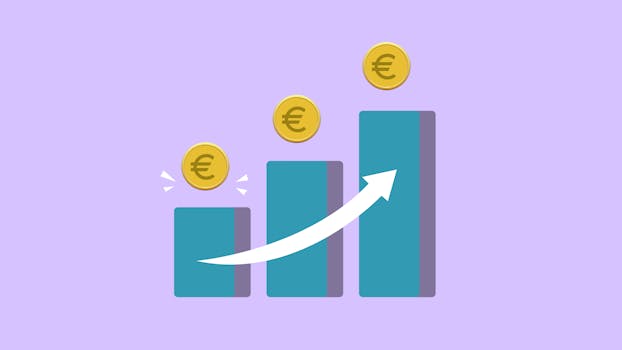
Vector illustration of income growth chart with arrow and euro coins against purple background Photo: Monstera Production / Pexels
At its heart, the compound interest definition describes the process where the interest you earn on an initial principal amount is reinvested, becoming part of the new principal for the next period. This means you start earning interest not only on your original investment but also on the accumulated interest from previous periods. It’s often referred to as 'interest on interest,' and it’s a concept so powerful that Albert Einstein is famously quoted as calling it the 'eighth wonder of the world.' While the exact attribution to Einstein is debated, the sentiment perfectly captures the profound impact of compounding on wealth accumulation. Unlike simple interest, which is calculated only on the original principal, compound interest allows your money to grow at an accelerating rate over time. This seemingly small difference has monumental implications for long-term financial planning and investment strategies. Imagine you deposit $1,000 into a savings account that pays 5% simple interest annually. After one year, you'd earn $50, making your total $1,050. If you continued for another year, you'd earn another $50, bringing your total to $1,100. The interest earned each year remains constant because it's always calculated on the original $1,000. Now, consider the same $1,000 at 5% compound interest, compounded annually. After the first year, you still have $1,050. However, in the second year, the 5% interest is calculated on the *new* principal of $1,050, not the original $1,000. This means you earn $52.50 ($1,050 * 0.05), bringing your total to $1,102.50. The extra $2.50 might seem insignificant initially, but over decades, this difference multiplies exponentially, leading to vastly different outcomes. This fundamental mechanism is what makes compound interest such a game-changer for savers and investors alike. Understanding this distinction is crucial for anyone looking to build financial security and grow their wealth effectively. For more insights into how different types of interest work, explore our guide on understanding interest rates.

The Mechanics of Compounding: How It Works Over Time

Wooden mannequin with a house, coins, and clock symbolizing time and financial planning. Photo: Picas Joe / Pexels
To truly appreciate the compound interest definition, it's essential to delve into its mechanics and see how it plays out over extended periods. The formula for compound interest is A = P (1 + r/n)^(nt), where: A = the future value of the investment/loan, including interest; P = the principal investment amount (the initial deposit or loan amount); r = the annual interest rate (as a decimal); n = the number of times that interest is compounded per year; t = the number of years the money is invested or borrowed for. This formula demonstrates how compounding frequency (n) and time (t) are critical variables. The more frequently interest is compounded (e.g., daily, monthly, quarterly, rather than annually), the faster your money grows, assuming the same annual interest rate. This is because interest is added to the principal more often, allowing subsequent interest calculations to be based on an even larger sum. Let's revisit our $1,000 example with a 5% annual interest rate, but this time, let's look at it over 20 years with annual compounding. After 20 years, with simple interest, you would have earned $50/year * 20 years = $1,000 in interest, for a total of $2,000. With compound interest, using the formula, A = 1000 * (1 + 0.05/1)^(1*20) = $2,653.30. That's an additional $653.30 just from the power of compounding. Now, imagine if you added more money to your principal regularly, like through monthly contributions to a retirement account. Not only does your existing balance compound, but your new contributions also start compounding immediately, further accelerating your wealth accumulation. This powerful synergy between consistent contributions and compound growth is the bedrock of successful long-term investing. The longer you let your money sit and compound, the more significant the impact, leading to an exponential growth curve. This is why starting early is often cited as the single most important factor in building substantial wealth. The early years might show modest gains, but the later years often see explosive growth as the snowball effect of compounding takes full hold. Understanding the math behind this growth can motivate individuals to make smarter financial choices.

Applications and Benefits: Harnessing Compound Interest for Wealth

Startup brainstorming with charts, colorful sticky notes, and planning strategies for success. Photo: RDNE Stock project / Pexels
The compound interest definition isn't just an academic concept; it's a practical tool for building significant wealth and achieving financial goals. Its most common application is in long-term savings and investments, particularly retirement accounts like 401(k)s and IRAs, where contributions are made consistently over decades. In these scenarios, the combination of regular contributions and the power of compounding allows even modest initial investments to grow into substantial nest eggs. For example, a 25-year-old who invests $5,000 annually into an account earning an average of 7% compounded annually could have over $1.1 million by age 65, purely due to the magic of compounding, assuming no further contributions beyond age 65 and consistent returns. This illustrates why starting early is paramount. The earlier you begin, the more time your money has to compound, and the less you actually need to contribute out of your own pocket to reach your goals. Beyond retirement, compound interest plays a crucial role in various other financial instruments. Savings accounts, certificates of deposit (CDs), and even certain types of bonds utilize compounding to grow your money. While the interest rates on these might be lower than equity investments, they still benefit from the 'interest on interest' principle. On the flip side, understanding compound interest is also vital when dealing with debt. High-interest credit card debt, for instance, compounds against you, making it incredibly difficult to pay off if only minimum payments are made. The interest on your outstanding balance is added to the principal, and then you pay interest on that new, larger principal. This inverse effect highlights the importance of paying down high-interest debt aggressively to prevent it from spiraling out of control. Recognizing both the beneficial and detrimental aspects of compounding allows individuals to make informed decisions that either accelerate their wealth or mitigate financial liabilities. For strategies on maximizing your returns, check out our insights on effective investment strategies.

Maximizing Your Compounding Potential: Tips and Common Mistakes

A hand places a coin into a golden piggy bank surrounded by financial documents, symbolizing savings. Photo: Atlantic Ambience / Pexels
To truly leverage the compound interest definition for your financial benefit, it's not enough to simply understand what it is; you need to actively apply strategies that maximize its potential. Here are some key tips: * **Start Early:** This is arguably the most critical factor. The longer your money has to compound, the more significant the growth. Even small amounts invested early can outperform larger amounts invested later. * **Invest Consistently:** Regular contributions, even modest ones, add to your principal, giving more money a chance to compound. Automate your investments to make this easier. * **Seek Higher Interest Rates (Wisely):** While higher rates accelerate growth, they often come with higher risk. Balance your desire for returns with your risk tolerance. * **Understand Compounding Frequency:** More frequent compounding (e.g., daily vs. annually) leads to slightly higher returns over time. Check how often your interest is compounded. * **Avoid High-Interest Debt:** Just as compounding helps you, it hurts you with debt. Pay off credit card balances and high-interest loans as quickly as possible to prevent interest from compounding against you. * **Reinvest Earnings:** For investments, ensure that dividends and interest payments are automatically reinvested back into the principal to maximize compounding. **Common Mistakes to Avoid:** * **Procrastination:** Delaying investments is the biggest enemy of compounding. Every year you wait is a year of potential growth lost. * **Frequent Withdrawals:** Dipping into your principal or accumulated interest disrupts the compounding process and slows down growth. * **Focusing Only on Principal:** Neglecting to factor in the compounding effect when calculating future values can lead to underestimating potential wealth. * **Ignoring Fees and Taxes:** High fees can eat into your returns, reducing the amount available to compound. Taxes on investment gains also impact your net compound growth, so consider tax-advantaged accounts like 401(k)s and IRAs.

Comparison

FeatureCompound InterestSimple InterestHigh-Interest Debt
Interest CalculationOn principal + accumulated interestOnly on original principalOn principal + accumulated interest
Growth Over TimeExponential accelerationLinear, steady growthExponential acceleration (negative)
Impact on WealthSignificant wealth buildingModest, slower growthRapid wealth erosion
Time Factor✓ Crucial for maximizing✗ Less impactful✓ Crucial for minimizing (pay quickly)
Best Use CaseLong-term savings, investmentsShort-term loans, basic savingsAvoid or pay off immediately

What Readers Say

"Understanding what is compound interest definition completely changed my financial outlook. I started investing earlier and now see my savings grow much faster than I ever imagined."

Sarah J. · Austin, TX

"This article clarified the 'interest on interest' concept perfectly. It's truly eye-opening how much difference starting early makes with compound interest."

David M. · Chicago, IL

"After reading this, I revamped my retirement plan. My projected balance increased by over $100,000 in 15 years just by optimizing for compound growth. Thank you!"

Maria P. · Miami, FL

"Great explanation of what is compound interest definition. While the math can be a bit daunting, the practical examples really drove the point home about its power."

John L. · Seattle, WA

"As a new investor, I always heard about compound interest but didn't truly grasp it until now. This guide made it incredibly clear and actionable, influencing my current investment choices."

Emily R. · Denver, CO

Frequently Asked Questions

What is the simplest way to explain what is compound interest definition?

Compound interest is interest earned on money that includes both your initial deposit (principal) and any interest that has accumulated over time. Essentially, your interest starts earning its own interest, leading to faster growth of your money.

Is compound interest always a good thing?

While compound interest is excellent for investments and savings, helping your money grow, it works against you when it comes to debt, especially high-interest loans like credit cards. In debt, interest is added to your principal, and then you pay interest on that larger amount, making it harder to pay off.

How can I calculate compound interest for my savings?

You can use the formula A = P (1 + r/n)^(nt), or more simply, use online compound interest calculators. These tools allow you to input your principal, interest rate, compounding frequency, and time to see your projected growth.

Does compounding frequency matter for my returns?

Yes, compounding frequency matters. The more frequently interest is compounded (e.g., daily vs. annually), the slightly higher your total returns will be over the same period, because your interest starts earning interest sooner.

How does compound interest compare to simple interest?

Simple interest is calculated only on the original principal amount, resulting in linear growth. Compound interest is calculated on the principal plus any accumulated interest, leading to exponential growth over time. Compound interest is significantly more powerful for long-term wealth building.

Who should actively use the power of compound interest?

Anyone looking to build long-term wealth should actively use compound interest. This includes individuals saving for retirement, a down payment on a home, a child's education, or any other significant financial goal. The earlier you start, the more beneficial it becomes.

Are there any risks associated with relying on compound interest for investments?

While the principle of compound interest itself is not a risk, the underlying investments that generate that interest carry risks. Market fluctuations can reduce your principal, thereby impacting the amount available to compound. It's important to choose investments aligned with your risk tolerance.

What is the future trend for compound interest in a digital age?

The core principle of compound interest remains timeless. In the digital age, access to investment platforms and automated savings tools makes it easier than ever to set up accounts that benefit from compounding, empowering more people to harness its power for financial growth.

Now that you understand what is compound interest definition, it's time to put this powerful concept to work for you. Start investing early, contribute consistently, and watch your wealth grow exponentially over time. Your future self will thank you for harnessing the 'eighth wonder of the world'.

Topics: compound interest definitionpower of compoundinginterest on interestinvesting growthfinancial literacy
Leo List
Brampton weed
Adultwork EstrelaBet Vai de Bet R7 Bet Betão Galera Bet Rainbet Bet9ja Shop SportyBet BetKing Sisal Loto Foot Hollywoodbets YesPlay Odibets RushBet Jugabet BetWarrior BetCity MSport betPawa Fortebet