What is a Roth IRA vs Traditional IRA? Your Ultimate Guide
Roth IRA vs Traditional IRA

What is a Roth IRA vs Traditional IRA? Your Ultimate Guide

Navigate the complexities of retirement savings and make an informed decision for your financial future.

Start Planning Now

Key Takeaways

  • ✓ Roth IRA contributions are after-tax; withdrawals are tax-free in retirement.
  • ✓ Traditional IRA contributions are often tax-deductible; withdrawals are taxed in retirement.
  • ✓ Contribution limits are the same for both Roth and Traditional IRAs.
  • ✓ Income limits can affect eligibility for Roth IRA contributions and Traditional IRA deductions.

How It Works

1
Understand Your Income & Tax Bracket

Your current income and anticipated future tax bracket are crucial for deciding which IRA is more beneficial. Higher current taxes favor Traditional, higher future taxes favor Roth.

2
Evaluate Contribution Eligibility

Check income limits for Roth IRAs and understand how workplace retirement plans might affect Traditional IRA deductibility. This determines which account types you can fully utilize.

3
Consider Your Retirement Goals

Think about when you plan to retire and your expected spending habits. This helps determine whether tax-free withdrawals or upfront deductions are more advantageous.

4
Open and Fund Your Chosen IRA

Select a brokerage firm, open your desired IRA, and begin contributing regularly. Consistency is key to maximizing your retirement savings over time.

Understanding the Traditional IRA: Tax Benefits Today

A flat lay of tax preparation essentials: calculator, coins, notepad, pen, and folder. Photo: Tara Winstead / Pexels
The Traditional IRA stands as a cornerstone of retirement planning for many Americans, primarily due to its immediate tax advantages. When you contribute to a Traditional IRA, your contributions are often tax-deductible in the year they are made. This means that the amount you contribute can be subtracted from your taxable income, potentially lowering your current year's tax bill. For instance, if you contribute $6,500 to a Traditional IRA and you're in the 22% tax bracket, you could save $1,430 on your taxes in that year. This upfront tax break is a significant draw for individuals who anticipate being in a higher tax bracket during their working years than in retirement. However, the tax benefits don't end with contributions. The money within a Traditional IRA grows tax-deferred. This means you don't pay taxes on the investment gains, dividends, or interest as they accumulate over the years. Instead, all taxes are postponed until you begin taking distributions in retirement. This deferral allows your money to compound more aggressively over time, as you're not losing a portion of your gains to taxes each year. Once you reach age 59½, you can begin withdrawing from your Traditional IRA without penalty. These withdrawals, both your original contributions and all the accumulated earnings, are then taxed as ordinary income. There are also rules regarding Required Minimum Distributions (RMDs), which generally mandate that you start taking withdrawals by a certain age (currently 73 for most individuals, though this has changed recently). Failing to take RMDs can result in steep penalties. Eligibility for deducting Traditional IRA contributions depends on several factors, including your income and whether you or your spouse are covered by a retirement plan at work, such as a 401(k) or 403(b). If neither you nor your spouse is covered by a workplace retirement plan, your Traditional IRA contributions are fully deductible, regardless of your income. However, if you are covered by a workplace plan, there are income phase-out ranges that determine how much of your contribution, if any, you can deduct. It's crucial to consult the IRS guidelines annually for the most up-to-date income thresholds. Understanding these nuances is vital for maximizing the tax efficiency of your Traditional IRA. For those looking to explore broader retirement strategies, learning about how to maximize your 401k can complement your Traditional IRA planning. The Traditional IRA is particularly attractive to those currently in a higher tax bracket who expect to be in a lower tax bracket in retirement. It's a powerful tool for reducing current taxable income while allowing your investments to grow tax-deferred for decades.

Exploring the Roth IRA: Tax-Free Growth and Withdrawals
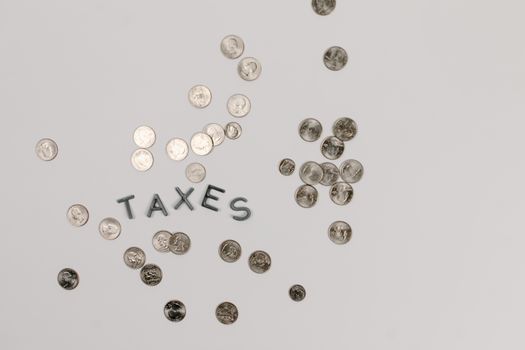
A visually striking flatlay of coins with 'Taxes' text on a white surface, ideal for financial concepts. Photo: Tara Winstead / Pexels
The Roth IRA offers a distinctly different, yet equally powerful, approach to retirement savings compared to its Traditional counterpart. The defining characteristic of a Roth IRA is that contributions are made with after-tax dollars. This means that you don't receive an upfront tax deduction for the money you put into a Roth IRA. While this might seem less appealing initially, the long-term benefit is substantial: qualified withdrawals in retirement are completely tax-free. This includes both your original contributions and all the earnings your investments have generated over time. Imagine contributing to a Roth IRA for 30 or 40 years, watching your investments grow significantly, and then being able to withdraw all that money in retirement without paying a single dollar in federal income tax. This tax-free growth and withdrawal feature is incredibly attractive, especially for individuals who anticipate being in a higher tax bracket during retirement than they are today. It also provides a valuable hedge against potential future tax rate increases. If tax rates go up in the future, your Roth IRA withdrawals remain untouched. To qualify for tax-free withdrawals, two main conditions must be met: the account must be open for at least five years (known as the five-year rule), and you must be at least 59½ years old, become disabled, or use the funds for a first-time home purchase (up to $10,000 lifetime limit). Unlike Traditional IRAs, Roth IRAs do not have Required Minimum Distributions (RMDs) for the original owner. This means you can leave the money in your Roth IRA for as long as you live, allowing it to continue growing tax-free, and then pass it on to your heirs tax-free as well. This RMD exemption offers incredible flexibility and estate planning advantages. However, eligibility for contributing to a Roth IRA is subject to income limitations. If your modified adjusted gross income (MAGI) exceeds certain thresholds, you may be unable to contribute the full amount or any amount to a Roth IRA. These income limits are adjusted annually by the IRS. For individuals whose income is too high to contribute directly to a Roth IRA, a strategy known as the "Backdoor Roth IRA" might be available, which involves contributing to a non-deductible Traditional IRA and then converting it to a Roth IRA. This complex maneuver typically requires careful planning and potentially professional tax advice. The Roth IRA is an excellent choice for younger investors, those in lower tax brackets now who expect to earn more in the future, or anyone who values tax-free income in retirement and flexibility with RMDs.

Key Differences and How to Choose Your Ideal IRA

Overhead view of woman organizing finances on bed with laptop and checks. Photo: cottonbro studio / Pexels
The fundamental distinction between a Roth IRA and a Traditional IRA boils down to when you receive your tax break and how your withdrawals are treated in retirement. With a Traditional IRA, you get your tax break upfront, in the form of a deduction on your contributions, and your withdrawals in retirement are taxed as ordinary income. Conversely, a Roth IRA offers no upfront tax deduction, but your qualified withdrawals in retirement are completely tax-free. This core difference drives the decision-making process for most individuals. One of the most important factors to consider is your current tax bracket versus your anticipated tax bracket in retirement. If you believe you are currently in a higher tax bracket than you will be in retirement, a Traditional IRA might be more advantageous. The upfront deduction saves you more money now. However, if you expect to be in a higher tax bracket during retirement, or if you simply prefer the certainty of tax-free income later, a Roth IRA could be the superior choice. This is often the case for younger professionals who anticipate their income and corresponding tax bracket to grow significantly over their careers. Another crucial difference lies in the treatment of Required Minimum Distributions (RMDs). Traditional IRAs generally require you to start taking withdrawals by age 73, whether you need the money or not. Roth IRAs, for the original owner, do not have RMDs. This offers unparalleled flexibility, allowing your money to continue growing tax-free for your entire life and providing a powerful estate planning tool. You can pass a Roth IRA to your beneficiaries, and they will receive tax-free distributions (though RMDs will apply to beneficiaries). Contribution limits are generally the same for both account types, but income limitations apply differently. While Traditional IRA contributions may be non-deductible for higher earners covered by a workplace plan, Roth IRAs have explicit income phase-out limits that can prevent direct contributions altogether. This is where strategies like the Backdoor Roth IRA come into play for high-income earners. Access to funds also differs. With a Roth IRA, you can withdraw your original contributions at any time, tax-free and penalty-free, as they were already taxed. This flexibility can be a comfort for those who might need access to their principal in an emergency, though it's generally advised to keep retirement funds untouched. Traditional IRA withdrawals before age 59½ are typically subject to both income tax and a 10% early withdrawal penalty, with some exceptions. Finally, considering your entire financial picture is key. If you have access to a 401(k) or other workplace retirement plan, your IRA decision should be integrated with those accounts. For example, if your 401(k) is Traditional, a Roth IRA can provide valuable tax diversification. For more insights on integrating different retirement vehicles, explore optimizing your retirement portfolio. Ultimately, there's no single "best" option; the ideal choice depends on your individual circumstances, income, tax situation, and long-term financial goals. Many financial advisors even recommend a blended approach, contributing to both a Traditional and a Roth account to achieve maximum tax diversification.

Smart Strategies and Common Mistakes to Avoid

Close-up of tax forms and a small business accounting checklist on a laptop. Photo: Leeloo The First / Pexels
Navigating the world of IRAs can be complex, but with smart strategies and an awareness of common pitfalls, you can maximize your retirement savings. Here are some key tips and mistakes to avoid: * **Start Early and Be Consistent:** The power of compound interest is your greatest ally. Even small, regular contributions early in your career can grow into substantial sums over decades. Don't wait; open an IRA and set up automatic contributions. * **Diversify Your Investments:** Don't just open an IRA; invest the money within it. Choose a diversified portfolio of stocks, bonds, and other assets that align with your risk tolerance and time horizon. An IRA is just the wrapper; the investments inside are what generate growth. * **Consider a Blended Approach:** For many, a mix of both Traditional and Roth accounts offers the best tax diversification. This strategy hedges against uncertainty regarding future tax rates. If rates go up, your Roth is valuable; if they go down, your Traditional is beneficial. * **Understand Contribution Limits:** Stay informed about the annual IRA contribution limits set by the IRS. Maxing out your contributions each year is one of the most effective ways to build a robust retirement nest egg. * **Review Your Beneficiaries Regularly:** Life changes, and so should your beneficiary designations. Ensure your IRA beneficiaries are up-to-date to avoid unnecessary complications or unintended distributions upon your passing. **Common Mistakes to Avoid:** * **Not Investing the Money:** A common error is contributing to an IRA but leaving the funds uninvested in cash. Cash earns minimal returns, negating the growth potential of an IRA. Always invest your contributions. * **Ignoring Income Limits:** For Roth IRAs, exceeding income limits can lead to penalties if contributions are made directly. For Traditional IRAs, not understanding deductibility rules can lead to incorrect tax filings. Consult the IRS or a tax professional. * **Early Withdrawals:** While Roth IRA contributions can be withdrawn tax-free, taking out earnings before age 59½ (without meeting an exception) or any money from a Traditional IRA early can result in significant taxes and penalties, severely hindering your retirement savings. * **Forgetting to Rebalance:** Your investment portfolio needs occasional rebalancing to maintain your desired asset allocation. Failing to do so can expose you to excessive risk or reduce potential returns. * **Not Considering a Spousal IRA:** If one spouse earns little or no income, a Spousal IRA allows them to contribute to an IRA based on the other spouse's earned income. This is a powerful tool for dual-income retirement planning that is often overlooked. By proactively implementing these strategies and carefully avoiding common pitfalls, you can optimize your IRA choices and build a strong foundation for a financially secure retirement.

Comparison

FeatureTraditional IRARoth IRAWhy it Matters
Tax Deduction on Contributions✓ (often, income limits apply)✗ (contributions are after-tax)Impacts your current year's taxable income.
Tax on Qualified WithdrawalsTaxed as ordinary incomeTax-freeDetermines your tax burden in retirement.
GrowthTax-deferredTax-freeAffects how much your money compounds over time.
Income Limits for ContributionsNo limit to contribute; deduction may be limited by income and workplace plan✓ (direct contributions have MAGI limits)Determines eligibility for direct contributions.
Required Minimum Distributions (RMDs)✓ (generally starts at age 73)✗ (for original owner)Flexibility in when you must withdraw funds.
Withdrawal of Contributions (Penalty-Free)✗ (generally after 59½)✓ (at any time)Access to your principal in emergencies.
Best for Current Tax BracketHigherLowerAligns tax benefits with your current financial situation.
Best for Future Tax BracketLowerHigherAligns tax benefits with your expected financial situation in retirement.

What Readers Say

"Understanding what is a Roth IRA vs Traditional IRA was crucial for my financial plan. This article broke down the tax implications so clearly, helping me choose the Roth for my current income level and future goals."

Sarah J. · Austin, TX

"I always struggled with the differences, but this guide made it incredibly easy to grasp. The comparison table was a lifesaver for seeing the pros and cons side-by-side. Highly recommend!"

Mark D. · Chicago, IL

"Thanks to this detailed explanation, I decided to open a Traditional IRA and immediately saw the benefit on my tax return. My retirement savings are finally on track, and I feel much more confident."

Emily R. · Seattle, WA

"While I had a basic understanding, this article provided deeper insights, especially on the RMD differences. It confirmed my decision to diversify with both a Roth and a Traditional IRA. Very helpful."

David L. · Miami, FL

"As a young professional, the concept of what is a Roth IRA vs Traditional IRA seemed daunting. This guide's focus on future tax brackets really resonated with me, leading me to confidently open a Roth IRA for tax-free growth."

Jessica M. · Denver, CO

Frequently Asked Questions

What is the main difference between a Roth IRA and a Traditional IRA?

The main difference lies in when you get your tax break. With a Roth IRA, you contribute after-tax money, and qualified withdrawals in retirement are tax-free. With a Traditional IRA, contributions are often tax-deductible, reducing your current taxable income, but withdrawals in retirement are taxed as ordinary income.

Can I contribute to both a Roth IRA and a Traditional IRA in the same year?

Yes, you can contribute to both a Roth IRA and a Traditional IRA in the same year, but your combined contributions for both accounts cannot exceed the annual IRA contribution limit set by the IRS. You must also meet the eligibility requirements for each account type.

How do I choose between a Roth IRA and a Traditional IRA?

Choosing depends on your current and future tax situations. If you expect to be in a higher tax bracket in retirement, a Roth IRA (tax-free withdrawals) is often better. If you're in a high tax bracket now and expect to be in a lower one in retirement, a Traditional IRA (upfront deduction) might be more beneficial. Consider your income, eligibility, and long-term financial goals.

Are there income limitations for contributing to a Roth IRA or deducting a Traditional IRA?

Yes, Roth IRAs have modified adjusted gross income (MAGI) limits that can reduce or eliminate your ability to make direct contributions. For Traditional IRAs, while there's no income limit to contribute, the deductibility of your contributions can be phased out or eliminated if you (or your spouse) are covered by a workplace retirement plan and your income exceeds certain thresholds.

What happens if I need to withdraw money from my IRA early?

Early withdrawals (before age 59½) from a Traditional IRA are generally subject to both income tax and a 10% early withdrawal penalty. For a Roth IRA, you can withdraw your original contributions at any time tax-free and penalty-free. However, withdrawing earnings from a Roth IRA before meeting the five-year rule and age 59½ typically incurs taxes and penalties, with some exceptions.

Who should consider a Roth IRA?

A Roth IRA is generally ideal for younger individuals, those currently in lower tax brackets who anticipate earning more and moving into higher tax brackets in the future, or anyone who values tax-free income in retirement and the flexibility of no Required Minimum Distributions (RMDs) for the original owner.

Are IRAs safe investments?

IRAs are investment vehicles, not specific investments themselves. The safety of your IRA depends on the underlying investments you choose within the account. While the accounts offer tax advantages, the value of your investments can fluctuate. It's crucial to select investments that align with your risk tolerance and financial goals.

How might future tax changes affect my IRA choice?

Future tax changes are a significant unknown. A Roth IRA provides a hedge against potentially higher future tax rates, as your withdrawals are tax-free regardless of what rates become. A Traditional IRA provides tax savings today. Diversifying with both types of accounts can offer flexibility to adapt to future tax landscapes.

Understanding what is a Roth IRA vs Traditional IRA is the first step towards a secure retirement. Take control of your financial future by applying these insights and choosing the IRA that best aligns with your unique goals and tax situation. Start building your tax-advantaged savings today!

Topics: Roth IRA vs Traditional IRAretirement accountsIRA contribution limitstax-advantaged savingsIRA withdrawals
Leo List
Brampton weed
Adultwork EstrelaBet Vai de Bet R7 Bet Betão Galera Bet Rainbet Bet9ja Shop SportyBet BetKing Sisal Loto Foot Hollywoodbets YesPlay Odibets RushBet Jugabet BetWarrior BetCity MSport betPawa Fortebet