What is the Stock Market Today? Your Daily Guide
what is the stock market today

What is the Stock Market Today? Your Daily Guide

Unlock clarity on market movements, economic indicators, and investment opportunities impacting the stock market right now.

Explore Market Insights

Key Takeaways

  • ✓ The stock market is a dynamic ecosystem where company shares are bought and sold.
  • ✓ Market performance is influenced by economic data, corporate earnings, and geopolitical events.
  • ✓ Major indices like the S&P 500, Dow Jones, and Nasdaq provide a snapshot of market health.
  • ✓ Understanding daily market movements requires monitoring news, economic reports, and company announcements.

How It Works

1
Access Real-time Data

Utilize financial news websites, brokerage platforms, or dedicated market data services. These sources provide current stock prices, index values, and trading volumes.

2
Identify Key Market Movers

Look for headlines about major companies, sectors, or economic reports. Significant news often drives large price swings in individual stocks or the broader market.

3
Analyze Economic Indicators

Pay attention to inflation reports, interest rate decisions, employment figures, and GDP growth. These macroeconomic factors profoundly influence investor sentiment and corporate profitability.

4
Consider Global Events

Geopolitical tensions, international trade agreements, and global health crises can have far-reaching effects. The interconnectedness of global economies means events abroad often impact the U.S. stock market.

Understanding the Daily Pulse of the Stock Market
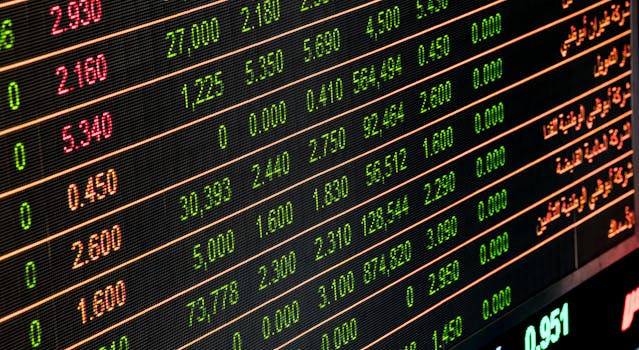
Detailed view of a stock market screen showing numbers and data, symbolizing financial trading. Photo: Pixabay / Pexels
The question, "what is the stock market today?" is far more complex than a simple price quote. It encapsulates a dynamic interplay of global economics, corporate performance, investor sentiment, and geopolitical forces. Every trading day, billions of dollars change hands as investors buy and sell shares of publicly traded companies, driving prices up or down based on a multitude of factors. To truly grasp the daily pulse, one must look beyond the ticker symbols and delve into the underlying mechanisms that dictate market direction. At its core, the stock market reflects collective expectations about the future. When investors are optimistic about economic growth, corporate earnings, or a particular industry, they tend to buy stocks, pushing prices higher. Conversely, fear, uncertainty, or negative news can trigger selling, leading to price declines. This constant tug-of-war between buyers and sellers creates the volatility that defines daily market movements. Major stock indices like the S&P 500, Dow Jones Industrial Average, and Nasdaq Composite serve as barometers, offering a quick snapshot of the overall market's health. The S&P 500, for instance, tracks 500 of the largest U.S. publicly traded companies, making it a broad representation of the U.S. equity market. A rise in these indices generally indicates a positive day for the market, while a fall suggests a negative one. However, a general rise or fall doesn't tell the whole story. Digging deeper, one might find that while the overall market is up, certain sectors or individual stocks are performing poorly, and vice versa. This highlights the importance of understanding sector-specific trends and individual company news. For example, a positive earnings report from a tech giant can lift the entire technology sector, even if other sectors are struggling. Similarly, regulatory changes impacting a specific industry can cause significant shifts within that sector. Therefore, when asking "what is the stock market today," it's crucial to consider not just the aggregate numbers but also the nuanced performance across different segments of the market. Staying informed about these various layers of information is key to making sound investment decisions and understanding the broader economic landscape. For those new to the market, a solid understanding of basic investment principles is indispensable.

Key Factors Driving Today's Market Performance
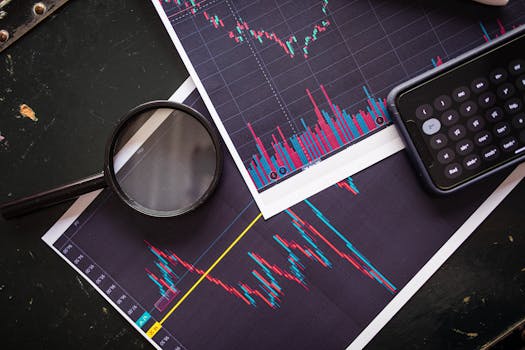
Stock market charts analyzed with a magnifying glass and calculator for financial research. Photo: RDNE Stock project / Pexels
Several critical factors converge daily to shape what is the stock market today. These influences can range from macroeconomic announcements to specific company news, and their impact can be immediate and profound. Understanding these drivers is essential for anyone looking to interpret market movements and anticipate future trends. Firstly, economic data plays a paramount role. Reports on inflation (like the Consumer Price Index or Producer Price Index), employment figures (such as the Non-Farm Payrolls and unemployment rate), Gross Domestic Product (GDP) growth, and manufacturing indices (like the ISM Manufacturing PMI) provide insights into the health and direction of the broader economy. Strong economic data often signals robust corporate earnings and consumer spending, which typically translates to a bullish market. Conversely, weak data can trigger concerns about a potential recession or slowing growth, leading to market downturns. Secondly, corporate earnings reports are a significant catalyst. Every quarter, publicly traded companies release their financial results, detailing revenue, profits, and future guidance. When companies exceed earnings expectations, their stock prices often jump, and if enough major companies report strong results, it can lift the entire market. Conversely, missed earnings or pessimistic outlooks can lead to sharp declines. Investors closely scrutinize these reports for signs of growth, profitability, and management's confidence in future prospects. A single earnings surprise from a market heavyweight can send ripples across its sector and even the broader indices. Thirdly, interest rates and monetary policy decisions by central banks, particularly the U.S. Federal Reserve, are critical. Changes in interest rates affect borrowing costs for businesses and consumers, influencing investment, spending, and economic growth. Higher interest rates can make bonds more attractive relative to stocks, potentially drawing capital out of the equity market. The Fed's commentary on inflation and economic outlook, even without an immediate rate change, can significantly sway market sentiment. Geopolitical events also cast a long shadow over the market. Wars, trade disputes, political instability in key regions, or even major international agreements can introduce uncertainty, impacting global supply chains, commodity prices, and investor confidence. Such events can trigger flight-to-safety trades, where investors move from riskier assets like stocks to safer havens like government bonds or gold. Lastly, technological advancements and disruptive innovations can create new industries or upend existing ones, leading to significant shifts in market leadership and investment opportunities. Understanding these intertwined factors is fundamental to comprehending the daily fluctuations and long-term trajectory of the stock market.

Navigating Market Volatility and Investor Sentiment
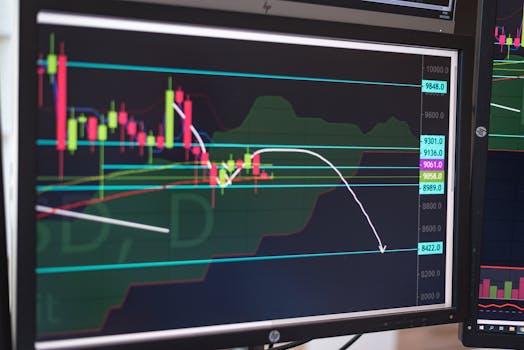
Close-up of a cryptocurrency trading chart displayed on a monitor, showing market trends and analysis. Photo: AlphaTradeZone / Pexels
Market volatility is an inherent characteristic of the stock market, reflecting the constant recalibration of asset prices based on new information and changing expectations. While some days offer steady gains or losses, others are marked by dramatic swings, making the question of "what is the stock market today" particularly pertinent for active investors. Volatility can be unsettling, but it also presents opportunities for those who understand its drivers. Often, volatility is amplified by investor sentiment – the collective attitude of market participants towards an asset or the market as a whole. Fear and greed are powerful emotions that can lead to irrational decision-making, contributing to exaggerated price movements. During periods of high fear, investors may panic sell, driving prices down beyond what fundamental analysis might suggest. Conversely, excessive optimism can lead to speculative bubbles. Monitoring investor sentiment involves looking at various indicators, such as the CBOE Volatility Index (VIX), often called the 'fear index,' which measures expected market volatility over the next 30 days. High VIX values typically correspond to periods of market uncertainty and potential downturns. Other sentiment gauges include surveys of individual and institutional investors, put/call ratios (which reflect options trading activity), and even social media trends. Understanding these indicators can help investors gauge the prevailing mood and make more informed decisions, rather than being swept away by emotional tides. It's crucial for investors to differentiate between short-term market noise and long-term fundamental trends. A sudden dip might be a temporary reaction to minor news, or it could signal a more significant shift requiring portfolio adjustments. Successful navigation of market volatility often involves a well-defined investment strategy that aligns with one's risk tolerance and financial goals. This strategy might include diversification across different asset classes, sectors, and geographies to mitigate specific risks. Dollar-cost averaging, where investors consistently invest a fixed amount over time, regardless of market fluctuations, can also help smooth out returns and reduce the impact of short-term volatility. Furthermore, maintaining a long-term perspective is vital. While daily market movements can be captivating, historical data shows that over extended periods, the stock market has generally trended upwards, rewarding patient investors. Educating oneself about different investment vehicles and strategies can significantly improve one's ability to weather market storms. For more on managing risk, consider exploring resources on personal finance risk management.

Strategies for Staying Informed and Making Smart Decisions

Elderly businesswoman reading a newspaper beside a car outdoors, conveying professionalism and confidence. Photo: Pavel Danilyuk / Pexels
To effectively answer "what is the stock market today" and leverage that knowledge for better investment outcomes, a proactive approach to staying informed is essential. This doesn't mean obsessively checking stock prices every minute, but rather establishing a routine for consuming relevant, high-quality information and applying critical thinking. **1. Diversify Your News Sources:** Relying on a single news outlet can lead to a narrow perspective. Follow reputable financial news organizations (e.g., The Wall Street Journal, Bloomberg, Reuters, Financial Times), economic data releases from government agencies (e.g., Bureau of Labor Statistics, Federal Reserve), and analysis from established investment firms. This provides a balanced view and helps cross-reference information. **2. Understand Key Economic Indicators:** Familiarize yourself with the schedule and significance of major economic reports. Knowing when the Consumer Price Index (CPI), jobs report, or Federal Reserve interest rate decisions are due will help you anticipate potential market reactions. **3. Follow Company-Specific News:** For individual stocks you own or are considering, pay attention to earnings reports, merger & acquisition announcements, product launches, management changes, and regulatory developments. These can have a direct and significant impact on stock performance. **4. Utilize Technology:** Brokerage platforms often offer research tools, news feeds, and analytical reports. Financial apps can provide real-time quotes and customizable watchlists. Set up alerts for specific stocks or market events that are important to your portfolio. **5. Cultivate a Long-Term Perspective:** While daily market news is important for understanding the immediate landscape, avoid making impulsive decisions based on short-term fluctuations. Focus on your long-term financial goals and investment strategy. This helps in distinguishing between temporary noise and fundamental shifts. **6. Review Your Portfolio Regularly:** Periodically assess how market conditions are impacting your investments. This doesn't mean daily trading, but perhaps a quarterly or semi-annual review to ensure your portfolio remains aligned with your risk tolerance and objectives. **7. Consult Financial Professionals:** If you find the complexity overwhelming, consider seeking advice from a qualified financial advisor. They can provide personalized guidance based on your specific situation. By adopting these strategies, you can move beyond simply knowing the current market numbers to understanding the forces at play and making more informed, strategic investment decisions. The goal isn't to predict the future perfectly, but to position yourself to navigate market conditions effectively.

Comparison

FeatureLong-Term InvestingShort-Term TradingDiversified Portfolio
Time HorizonYears to DecadesMinutes to MonthsYears to Decades
Primary GoalWealth AccumulationQuick ProfitsRisk Mitigation & Growth
FocusFundamentals, MacroeconomicsTechnical Analysis, NewsAsset Allocation, Fundamentals
Risk LevelModerateHighModerate to Low (with diversification)
Required TimeLow (periodic review)High (daily monitoring)Moderate (periodic rebalancing)
Emotional ImpactLower (less reaction to daily swings)Higher (stressful decisions)Lower (stability from diversification)

What Readers Say

"This guide truly helped me understand what is the stock market today beyond just the numbers. The breakdown of economic factors was particularly insightful and made current events much clearer."

Sarah J. · Austin, TX

"As a new investor, I often felt lost trying to decipher market news. This article provided a fantastic framework for understanding daily movements and key drivers. Highly recommend!"

Mark D. · Chicago, IL

"I used to just check my portfolio and wonder why it went up or down. After reading this, I now actively track economic reports and company news, which has led to more informed decisions and a 7% portfolio increase this quarter."

Emily R. · Seattle, WA

"A very thorough explanation of the stock market's daily dynamics. While some parts were a bit advanced for a beginner, the overall structure and tips for staying informed were incredibly valuable."

David L. · Miami, FL

"Even as an experienced investor, I found the section on investor sentiment and navigating volatility to be a great refresher. It helps reinforce disciplined approaches to market fluctuations."

Jessica M. · Denver, CO

Frequently Asked Questions

What are the main indices to watch to understand what is the stock market today?

The primary indices to monitor are the S&P 500, Dow Jones Industrial Average (DJIA), and Nasdaq Composite. The S&P 500 is often considered the best overall barometer of the U.S. stock market, while the DJIA represents 30 large, publicly owned companies, and the Nasdaq is heavily weighted towards technology and growth stocks.

Should I panic if the stock market is down significantly today?

Significant daily market downturns are a normal part of investing and do not necessarily warrant panic. Panicking often leads to impulsive decisions like selling at a loss. It's crucial to understand the underlying reasons for the drop and to maintain a long-term perspective. Consult your investment strategy before reacting.

How can I get real-time updates on what is the stock market today?

You can get real-time updates through various financial news websites (e.g., Bloomberg, Reuters, Yahoo Finance), dedicated stock market apps on your smartphone, or directly through your brokerage account platform. Many of these sources offer live tickers, news feeds, and customizable alerts.

Does today's stock market performance affect my long-term investments?

Today's stock market performance can affect the immediate value of your long-term investments, but typically, daily fluctuations have minimal impact on well-diversified portfolios held for many years. Long-term investors focus on fundamental growth and overall market trends rather than short-term volatility. Consistent investing and rebalancing are often more important.

How does inflation impact what is the stock market today?

Inflation can significantly impact the stock market. High inflation erodes purchasing power, increases business costs, and can lead central banks to raise interest rates to cool the economy. Higher interest rates can make bonds more attractive and increase borrowing costs for companies, potentially dampening corporate profits and stock valuations.

Who should pay close attention to what is the stock market today?

Anyone with investments in the stock market, including retirement accounts or brokerage portfolios, should pay some attention. Active traders and day traders need constant vigilance, while long-term investors benefit from understanding major trends and economic shifts without needing to track every minute movement. Business owners and economists also closely monitor market health.

Is the stock market safe to invest in today?

The stock market inherently carries risk, as stock prices can go up or down. There's no guarantee of returns, and you can lose money. However, for those with a long-term horizon and a diversified portfolio, the stock market has historically provided significant returns, outpacing inflation. 'Safe' is relative to your risk tolerance and investment strategy.

What are the future trends expected to influence the stock market?

Future trends expected to influence the stock market include continued technological innovation (AI, biotech), climate change initiatives and renewable energy, demographic shifts, evolving geopolitical landscapes, and the ongoing impact of global supply chains. These long-term trends will shape industries and company performance for decades to come.

Understanding what is the stock market today empowers you to make informed financial decisions. Dive deeper into market dynamics and equip yourself with the knowledge to navigate the financial landscape with confidence. Start your journey towards smarter investing now.

Topics: what is the stock market todaystock market newsinvesting in stocksmarket trendsfinancial markets
Leo List
Brampton weed
Adultwork